
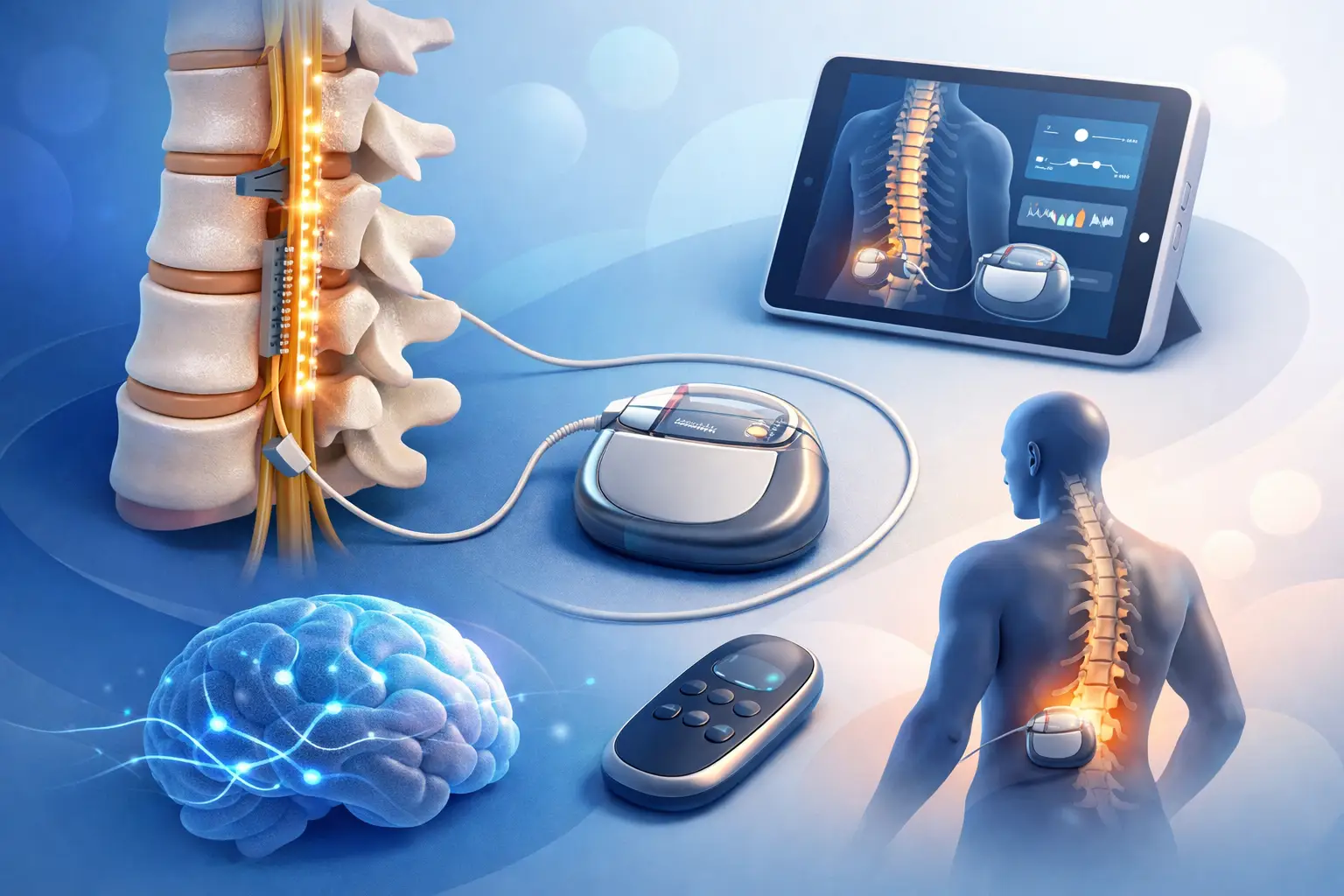
When pain keeps returning despite medications, physical therapy, injections, or even surgery, the next step should not feel like a guess. This guide to spinal cord stimulation is designed to help you understand when this treatment may be appropriate, how the process works, and what realistic results can look like if chronic nerve-related pain is affecting your daily life.
What spinal cord stimulation is and what it treats
Spinal cord stimulation is a minimally invasive pain treatment that uses mild electrical impulses to change how pain signals are processed before they reach the brain. A small device sends these signals through thin wires placed near the spinal cord. The goal is not to repair the underlying structure directly, but to reduce the intensity of pain and improve function.
This treatment is most often considered for people with chronic pain that has not responded well enough to more conservative care. It can be especially helpful in cases of nerve-related pain, including persistent back or leg pain after spine surgery, complex regional pain syndrome, diabetic nerve pain in some patients, and certain forms of chronic neuropathic pain.
Spinal cord stimulation is not the right answer for every pain condition. Mechanical pain from severe instability, untreated compression, or a problem that clearly requires surgery may need a different plan. That is why careful diagnosis matters before discussing any implantable device.
Guide to spinal cord stimulation candidacy
The best candidates are usually people who have had persistent pain for months or longer, have tried reasonable non-surgical treatment, and still find that pain interferes with sleep, movement, work, or independence. Many are also looking for a path that may reduce reliance on opioid medication or avoid another major operation.
A strong candidate typically has pain with a neuropathic component. That may feel like burning, tingling, shooting, electric, or radiating pain. If your symptoms are more inflammatory, muscular, or joint-driven, another interventional treatment may be more effective.
Candidacy also depends on practical factors. You need to be medically suitable for a procedure, able to follow aftercare instructions, and open to the idea of a device-based treatment. A psychological screening is often part of the process, not because pain is “in your head,” but because long-term outcomes are better when expectations, coping, and support systems are carefully assessed.
How spinal cord stimulation works
The device has a few main parts: leads, which are thin wires placed in the epidural space near the spinal cord, and a small battery-powered generator implanted under the skin. The system delivers programmed electrical signals that alter pain transmission.
Older forms of stimulation often created a tingling sensation called paresthesia in the painful area. Newer systems may use different waveforms, frequencies, or burst patterns that can reduce pain without that constant sensation. The technology has improved significantly, but the principle is the same: modify pain signaling so the nervous system is less focused on the pain message.
What matters most to patients is the functional result. A good outcome may mean walking farther, sleeping better, sitting through a workday with less discomfort, or returning to activities that had become difficult. The aim is meaningful improvement, not perfection.
The trial comes before the permanent implant
One of the advantages of spinal cord stimulation is that it is usually tested before anything permanent is placed. This trial phase is a major reason the treatment can be approached thoughtfully rather than blindly.
During the trial, temporary leads are placed through a needle using image guidance. These leads are connected to an external battery, and you go home with the system for several days. During that period, your care team evaluates how much relief you get, which activities improve, and whether the stimulation meaningfully changes your quality of life.
Pain reduction is important, but so is function. If you report lower pain scores but still cannot move, sleep, or complete routine tasks any better, that matters. On the other hand, some patients may not describe dramatic pain elimination yet still experience enough functional improvement to consider the trial a success.
Most practices look for significant relief during the trial, often around 50 percent or better, along with practical improvement in daily life. That threshold is not a hard rule in every case. It depends on the condition being treated, your goals, and whether the result feels meaningful to you.
What the permanent procedure involves
If the trial is successful, the next step is the permanent implant. This procedure is more involved than the trial, but it is still minimally invasive compared with major spine surgery. The leads are placed in the appropriate location, and a small generator is implanted under the skin, often in the upper buttock or lower flank area.
After implantation, the device is programmed and adjusted over time. That adjustment period is normal. The first setting is not always the final setting, and patients often need follow-up programming to get the best result.
Recovery is generally manageable, but there are restrictions early on. Twisting, bending, and heavy lifting may be limited for a period so the leads can settle properly. Most people are encouraged to walk and resume light activity as directed, while avoiding movements that could shift the system before healing is complete.
Benefits and trade-offs to understand
The main benefit of spinal cord stimulation is the potential for substantial pain relief without a large surgical recovery. It may improve mobility, sleep, concentration, and overall participation in daily life. For some patients, it also helps reduce the need for pain medication.
Just as important, the treatment is adjustable. If your pain pattern changes or one program stops working as well, the device settings can often be modified. In many systems, the battery can also be recharged or replaced depending on the model.
Still, this is not a cure. Spinal cord stimulation manages pain; it does not remove the original diagnosis in every case. Some patients get excellent relief, some get moderate benefit, and some do not respond as hoped even after a promising start.
There are also risks. As with any procedure, infection, bleeding, and discomfort at the implant site are possible. Lead migration can happen, which may reduce effectiveness and sometimes require revision. Device malfunction is uncommon but possible. This is why precise placement, careful follow-up, and patient selection matter so much.
A realistic guide to spinal cord stimulation outcomes
If you are considering this treatment, it helps to think in terms of improvement rather than cure. Many successful patients still have some pain. The difference is that the pain becomes less dominant. They may be able to stand longer, travel more comfortably, return to hobbies, or get through the day without pain controlling every decision.
Results vary by diagnosis. Someone with failed back surgery syndrome and strong nerve pain symptoms may respond differently than someone with widespread pain from multiple causes. The presence of untreated structural problems, severe depression, active smoking, or poor overall health can also affect outcomes.
That is one reason experienced interventional pain specialists build treatment plans around the full clinical picture. In a physician-led practice such as Global Pain Solutions, spinal cord stimulation is considered as one option within a broader strategy, not as an isolated device solution. The best results usually come when the diagnosis is clear, expectations are realistic, and follow-up care is consistent.
Questions to ask before moving forward
If this treatment has been recommended, ask why you are a candidate and what diagnosis the device is intended to address. You should also ask what success would look like in your specific case. For one person, success may mean returning to work. For another, it may mean walking the dog, sleeping through the night, or sitting comfortably long enough to drive.
It is also worth asking about the type of system being considered, the trial process, activity restrictions, battery management, MRI compatibility, and what happens if the device stops helping later on. These are practical issues, and clear answers help patients feel more confident.
Finally, ask how your care team handles follow-up. Spinal cord stimulation is not a one-visit treatment. It works best when there is a thoughtful plan for programming, monitoring, and adjusting the approach over time.
When this treatment may be worth considering
If chronic nerve-related pain has narrowed your world and conservative treatment has not given enough relief, spinal cord stimulation may be worth a serious conversation. It offers a reversible, testable option for people who want more function and fewer limitations without rushing into another major surgery.
The most helpful next step is not to assume it will or will not work for you. It is to get a careful evaluation from a specialist who can define the source of pain, explain the alternatives, and tell you honestly whether this approach fits your goals. For many patients, that clarity is the moment treatment starts to feel possible again.