
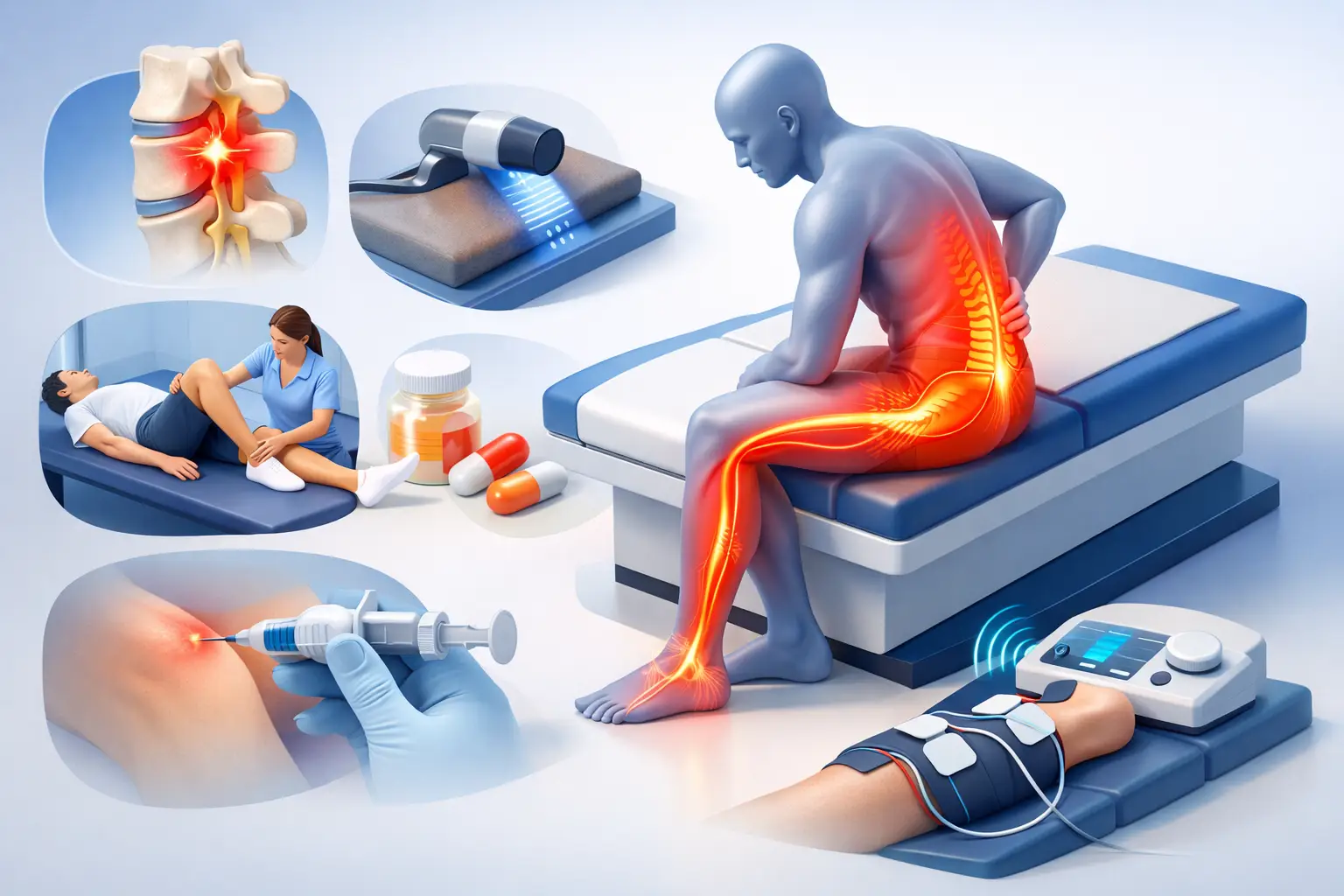
That sharp, electric pain running from the low back into the buttock or leg is hard to ignore. When patients ask about the best treatments for sciatica pain, they are usually not looking for a vague list of options. They want to know what actually helps, what is worth trying first, and when it is time to move beyond rest, stretching, and pain pills.
Sciatica is not a diagnosis by itself. It is a symptom pattern caused by irritation or compression of the sciatic nerve, usually from a lumbar disc herniation, spinal stenosis, degenerative changes, or inflammation around the nerve roots in the lower spine. That distinction matters because the right treatment depends on the source of the nerve irritation, how long symptoms have lasted, and whether weakness, numbness, or functional decline are part of the picture.
What are the best treatments for sciatica pain?
The best approach is usually staged, not one-size-fits-all. For many patients, effective treatment starts with confirming the cause, calming inflammation, and improving movement without making symptoms worse. If pain persists or keeps returning, more targeted care may be needed.
In the early phase, conservative treatment is often appropriate. That can include activity modification, anti-inflammatory medication when medically appropriate, and guided physical therapy. The goal is not simply to mask pain. It is to reduce nerve irritation, protect function, and prevent the cycle of guarding, stiffness, and worsening biomechanics that often prolongs recovery.
Still, conservative care has limits. If pain is severe, radiates below the knee, disrupts sleep, or makes walking and standing difficult, waiting too long can leave patients suffering unnecessarily. Sciatica that lasts for weeks despite basic care often responds better when treatment becomes more precise.
Physical therapy and movement-based care
Physical therapy is one of the most common first-line options for sciatica, and for good reason. The right program can improve spinal mechanics, reduce pressure on irritated nerve roots, and rebuild strength in the core, hips, and lower back. It can also help patients identify which motions calm symptoms and which ones aggravate them.
That said, not all exercise is helpful for all cases. A patient with a disc-related sciatica flare may respond well to extension-based movements, while someone with spinal stenosis may feel worse with the same program and do better in a flexion-biased plan. This is where individualized evaluation matters. Generic online stretches can help some people, but they can also intensify nerve pain if the underlying cause is different.
A good therapy plan should feel purposeful, progressive, and adjusted to the patient’s symptoms. If therapy repeatedly flares the leg pain without any functional improvement, it may be time to reassess the diagnosis or consider a different treatment path.
Medication can help, but it should not be the whole plan
For short-term relief, medications may play a role. Nonsteroidal anti-inflammatory drugs can reduce inflammation and pain in some patients. In selected cases, muscle relaxants or medications aimed at nerve-related pain may also be used. These treatments can make it easier to sleep, move, and participate in therapy.
But medication is rarely the complete answer for persistent sciatica. Opioids in particular are usually not the best long-term strategy. They may dull pain temporarily, but they do not correct nerve compression or inflammation at the source, and they come with significant risks when used over time. For patients who want durable improvement, the focus should stay on treatments that address why the pain is happening.
When injections become one of the best treatments for sciatica pain
If sciatica is not improving with conservative care, or if symptoms are too intense to allow normal movement, epidural steroid injections are often one of the best treatments for sciatica pain. These are not simple pain shots. When performed with image guidance, they deliver anti-inflammatory medication near the irritated nerve root with far greater precision than oral medication can provide.
For the right patient, an epidural injection can reduce inflammation enough to break the pain cycle and restore function. Some patients get dramatic relief. Others experience more moderate improvement that allows them to tolerate therapy and return to daily activities. The response depends on the underlying condition, the severity of compression, and how long the nerve has been irritated.
There is also nuance here. An injection is not a cure for every cause of sciatica, and results are not identical for everyone. But when leg pain is the dominant symptom and imaging supports nerve root inflammation or compression, a targeted epidural can be a very effective step between basic care and surgery.
Why diagnosis matters more than trying random remedies
One reason sciatica becomes chronic is that people often spend months treating the symptom without confirming the source. Piriformis syndrome, sacroiliac joint dysfunction, hip pathology, lumbar radiculopathy, and peripheral nerve issues can all create pain that feels similar to sciatica. If the diagnosis is wrong, the treatment often misses the mark.
A careful evaluation usually includes a physical exam, a review of symptom pattern, and when appropriate, imaging such as MRI. In some cases, diagnostic procedures help clarify where the pain is coming from. This matters because a patient with severe foraminal stenosis may need a very different plan than a patient recovering from an acute disc bulge.
That is why physician-led pain care can make such a difference for persistent symptoms. Instead of cycling through generic advice, patients get a plan built around the actual pain generator.
When minimally invasive care is the right next step
Many patients worry that if physical therapy and medication do not fix the problem, surgery is the only option left. That is often not the case. Interventional pain management offers a middle ground for patients who need more than conservative care but want to avoid unnecessary surgery whenever possible.
Image-guided spinal injections are the most common example, but the larger value is the precision of the process. The treatment plan is based on anatomy, symptom pattern, and functional goals. For some patients, the priority is walking without leg pain. For others, it is getting back to work, sleeping through the night, or reducing medication reliance. The best outcomes come when treatment is tailored to those realities rather than following a generic checklist.
In a specialty practice such as Global Pain Solutions, that kind of care is designed to be both evidence-based and practical. The focus is not on chasing temporary relief alone. It is on improving mobility, reducing nerve irritation, and helping patients return to daily life with less pain.
Signs you should not wait it out
Some cases of sciatica improve gradually over a few weeks. Others need prompt medical attention. If pain is worsening, if numbness is spreading, or if weakness is making it harder to lift the foot, climb stairs, or stand safely, evaluation should not be delayed. New bowel or bladder changes, or numbness in the saddle area, require urgent medical care.
Even without those red flags, persistent sciatica deserves attention when it is affecting work, sleep, or independence. People often minimize their symptoms for too long because they hope it will pass. Sometimes it does. But when nerve pain keeps interrupting life, earlier treatment can prevent a more prolonged and frustrating course.
What patients should expect from an effective treatment plan
The best treatments for sciatica pain are the ones that match both the diagnosis and the patient’s stage of recovery. Early on, that may mean movement-based care and short-term symptom control. If pain persists, advanced diagnostics and targeted injections may be the next logical step. If there is significant structural compression or progressive neurologic loss, surgical evaluation may still be appropriate.
What should not happen is endless trial and error without a clear strategy. Patients do best when they understand what is causing the pain, why a treatment is being recommended, and what success should look like. Relief may be fast, gradual, or partial at first, but the plan should always move toward better function and a more stable long-term result.
Living with sciatica can make even ordinary tasks feel uncertain, from getting out of bed to driving, working, or walking through the grocery store. The encouraging part is that many patients improve significantly when the source of the pain is identified and treated with precision. The next step is not doing more of everything. It is choosing the right treatment at the right time.