
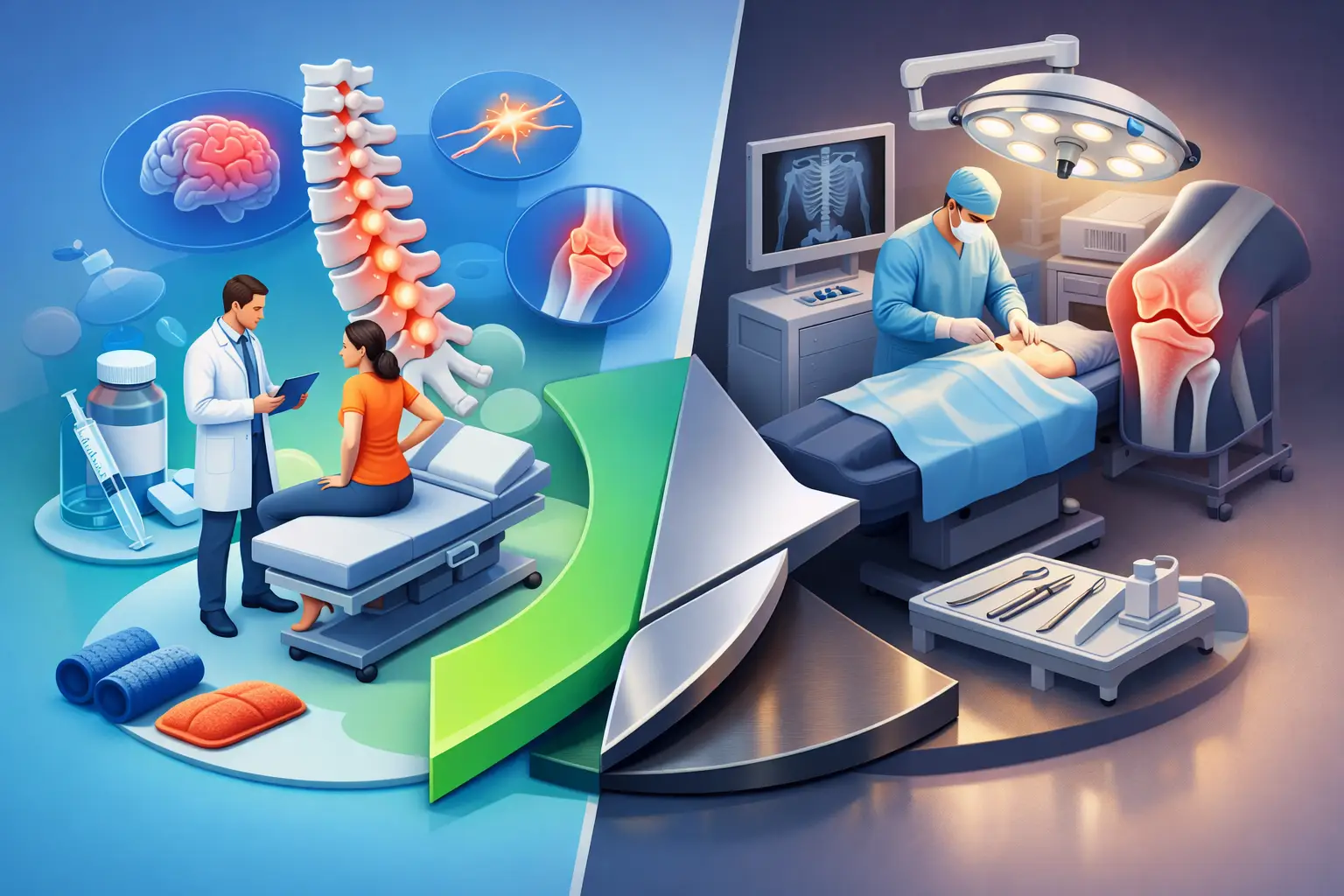
A recommendation for surgery can feel like a finish line – or a frightening fork in the road. Can pain management avoid surgery? In many cases, it can help patients reduce pain, regain movement, and postpone or eliminate the need for an operation. But the honest answer depends on the cause of pain, the severity of structural damage, and whether there are signs that delaying surgery could put nerve function or overall health at risk.
For people living with persistent back pain, sciatica, neck pain, arthritis, migraines, or pain after an injury, the goal should not be to simply endure symptoms until surgery becomes the only option. A thoughtful interventional pain management plan can identify the likely pain generator and use targeted treatments to improve function while preserving future options.
When Can Pain Management Avoid Surgery?
Surgery is most helpful when it corrects a clear structural problem that matches a patient’s symptoms. Examples may include significant spinal instability, a severe disc herniation causing progressive weakness, advanced joint damage, or a fracture that requires stabilization. It is not automatically the best next step simply because pain has lasted a long time or an MRI shows age-related changes.
Many imaging findings are common in people without pain. Disc bulges, arthritis, and degenerative changes may be part of the picture, but they do not always identify the true source of symptoms. That is why a pain specialist considers the full clinical picture: where pain starts, what movements worsen it, whether it travels into an arm or leg, how it affects sleep and work, the neurologic examination, and imaging when appropriate.
Pain management may help avoid surgery when symptoms arise from inflammation, irritated nerves, facet joints, sacroiliac joints, muscle dysfunction, or early-to-moderate joint arthritis. It can also be valuable when surgery is technically possible but the likely benefit is uncertain, recovery would be difficult, or a patient has medical conditions that increase surgical risk.
The aim is not to deny or delay a necessary operation. It is to make sure surgery is reserved for the situations where it is most likely to provide meaningful benefit.
Precise Diagnosis Changes the Treatment Plan
A generalized approach to chronic pain often leads to generalized results. Taking medication without a clear diagnosis may briefly dull symptoms, yet it may not restore the ability to walk, work, exercise, or sleep comfortably. Effective pain care begins by narrowing down the pain source.
For example, leg pain from lumbar radiculopathy may respond differently than low back pain caused by arthritic facet joints. Shoulder pain from inflammation within the joint differs from pain referred from the neck. A patient may have more than one source of pain, especially after years of altered movement or prior injuries.
At Global Pain Solutions, individualized evaluation helps determine whether a targeted procedure, rehabilitation strategy, medication adjustment, or surgical consultation is the most appropriate next step. Image guidance and diagnostic injections can provide useful information as well as relief. If numbing a specific joint or nerve produces substantial short-term improvement, that response can help confirm the treatment target.
Minimally Invasive Options That May Reduce the Need for Surgery
Interventional procedures are not one-size-fits-all substitutes for surgery. They are selected based on the diagnosis, symptom pattern, medical history, and functional goals. For the right patient, they may reduce inflammation, interrupt pain signals, or create enough relief to make movement and physical rehabilitation productive again.
An epidural steroid injection may be considered for radiating pain related to irritated spinal nerves. By reducing inflammation around the affected nerve root, it can lessen leg or arm symptoms and help some patients avoid an immediate surgical path. Relief varies. Some people experience a meaningful window for recovery and strengthening, while others may have only limited or temporary improvement.
For pain arising from arthritic spinal joints, diagnostic medial branch blocks may identify whether the facet joints are contributing to symptoms. If those blocks are successful, radiofrequency ablation may offer longer-lasting relief by interrupting pain transmission through carefully selected small nerves. It does not repair arthritis, but it can improve comfort and mobility without an operation for appropriately screened patients.
Joint injections and viscosupplementation may also be useful for certain knee, hip, shoulder, or other joint conditions. These treatments do not reverse severe joint degeneration, and they cannot replace a joint that has reached the point where replacement is clearly indicated. Still, they may allow patients with milder disease to stay active, participate in therapy, and defer surgery while monitoring their progress.
Spinal cord stimulation is another option for select patients with persistent nerve-related pain, including some people with pain that continues after spine surgery. A temporary trial helps determine whether stimulation provides meaningful improvement before a permanent device is considered. This is a more involved treatment than an injection, but it remains less invasive than many repeat spine operations.
Relief Alone Is Not the Only Measure of Success
Pain scores matter, but a successful treatment plan should be measured by daily life. Can you stand long enough to prepare a meal? Walk through the grocery store? Sit through a work meeting? Sleep without waking repeatedly? Return to activities that support your independence and well-being?
This functional perspective is especially important because an injection or procedure is rarely the entire plan. When pain is brought to a manageable level, patients are often better able to work on mobility, strength, posture, weight management when relevant, and movement habits that reduce stress on sensitive structures. That progress can make the benefit of a procedure last longer.
Long-term opioid use is generally not the preferred answer for chronic non-cancer pain when more targeted options are available. Medication may have a role in a carefully monitored plan, particularly during a pain flare or while other treatments take effect. However, medications alone may not address the underlying pain generator and can carry meaningful risks over time.
When Surgery Should Not Be Delayed
Avoiding unnecessary surgery does not mean avoiding a surgical evaluation. Certain symptoms need prompt medical attention. New or progressive weakness, loss of bowel or bladder control, numbness in the saddle area, fever with severe back pain, pain following significant trauma, or unexplained weight loss may signal a condition that requires urgent assessment.
Surgery may also be the soundest choice when there is progressive neurologic loss, severe mechanical instability, a fracture requiring stabilization, infection, tumor, or advanced damage that has not responded to appropriate nonsurgical care. In these circumstances, pain management can still play an important role before and after surgery, helping control symptoms and support recovery, but it should not replace needed surgical treatment.
A strong treatment plan does not frame pain care and surgery as opposing sides. The best plan uses each option at the right time and keeps the patient’s safety, function, and quality of life at the center of every decision.
How to Know Which Path Is Right for You
Before deciding on surgery, ask whether the diagnosis explains your symptoms, what nonsurgical treatments have been tried and for how long, and what improvement is realistically expected from each option. It is also reasonable to ask what could happen if you wait, what signs would mean the plan needs to change, and how success will be measured beyond a lower pain score.
A comprehensive pain evaluation can be particularly helpful for people who have been told to “live with it,” have tried physical therapy or medications without lasting relief, or are unsure whether an operation addresses the actual cause of their pain. The right next step may be a targeted procedure, a new rehabilitation strategy, a surgical opinion, or a combination of these approaches.
The most reassuring answer is not always “you will never need surgery.” It is having a physician-led plan that pursues meaningful relief with the least invasive effective option – and clearly recognizes when surgery is the better path. That clarity can help you move forward with confidence rather than fear.