
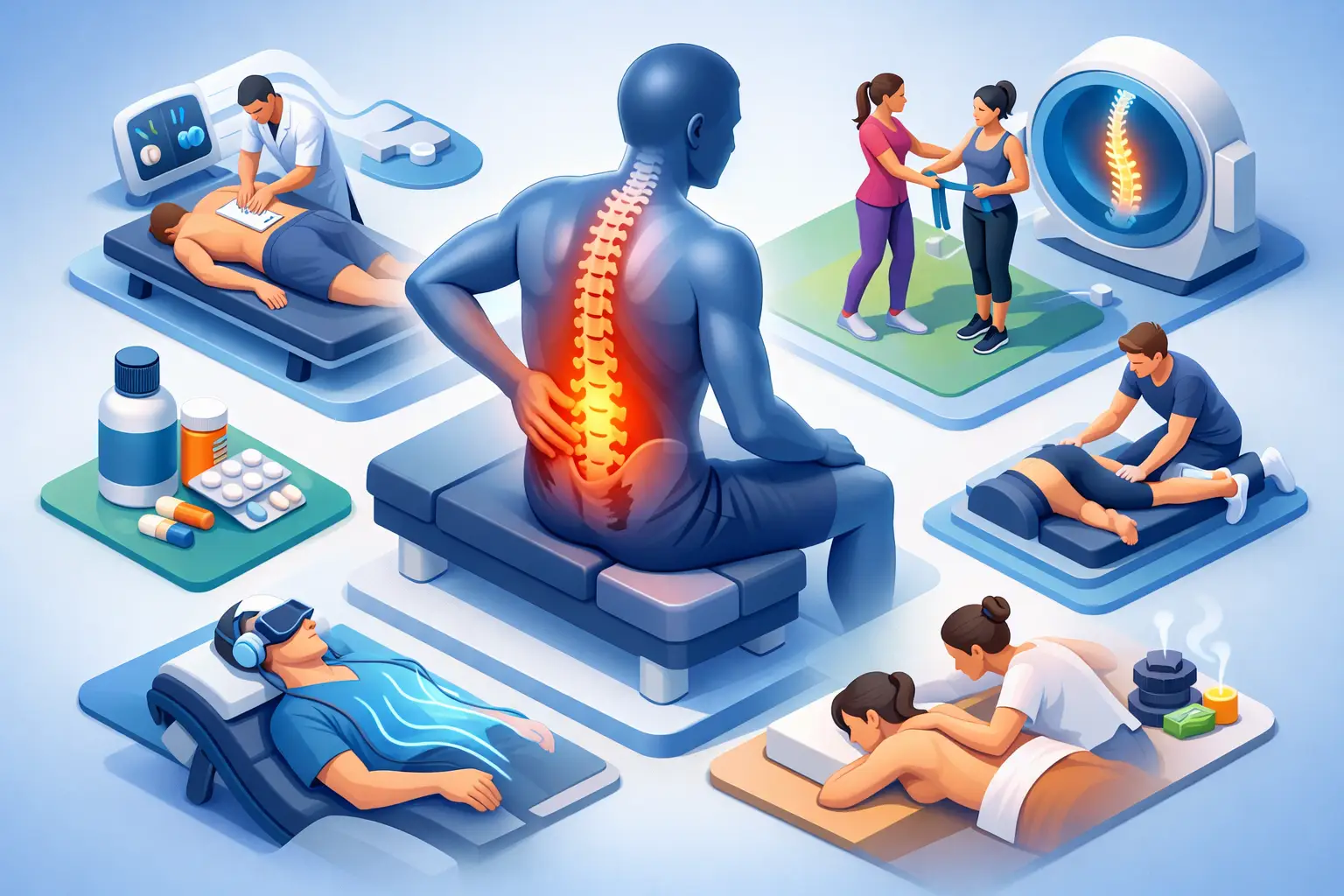
Back pain can make ordinary decisions feel calculated: whether to sit through a meeting, carry groceries, drive across town, or bend to pick something up. A thoughtful guide to non surgical back pain care begins with a reassuring fact: persistent pain does not automatically mean surgery is the next step. For many people, the best path is a precise diagnosis followed by treatments that reduce pain, improve mobility, and support a return to daily life.
The key is not simply finding the strongest treatment. It is finding the treatment that matches the source of the pain, your health history, and the activities you want to get back to doing.
Why the Source of Back Pain Matters
“Back pain” is a symptom, not a diagnosis. Pain may start in a spinal disc, facet joint, sacroiliac joint, nerve root, muscle, ligament, or a compression fracture. It can also be influenced by arthritis, prior surgery, an injury, poor movement patterns, or a medical condition outside the spine.
That is why generalized advice can fall short when pain has lasted for weeks or months. Rest may help an acute strain, for example, but it is less likely to resolve pain caused by irritated spinal nerves or arthritic facet joints. Medication can reduce symptoms temporarily, but it does not always identify the structure creating the pain.
A specialist-led evaluation typically combines a detailed discussion of symptoms, a physical examination, and imaging when appropriate. The location, timing, and character of pain all matter. Burning pain that travels down the leg may point toward nerve irritation, while pain that worsens with standing, twisting, or leaning backward can suggest a different pain generator.
Start With a Clear Assessment and a Functional Goal
Effective non-surgical care should be built around more than a pain score. A meaningful care plan asks what pain is preventing you from doing. That may be sleeping comfortably, walking the dog, returning to work, exercising, traveling, or caring for a family member.
During an evaluation, your physician may review prior imaging, medications, procedures, surgeries, injuries, and medical conditions. New imaging is not needed in every case, but an MRI, X-ray, or other study may be helpful when symptoms suggest nerve compression, structural change, a fracture, or another condition requiring closer evaluation.
A functional goal also helps set realistic expectations. Some treatments provide quick relief, while others are designed to create a window in which rehabilitation becomes more productive. Chronic pain is often best addressed with a coordinated plan rather than a single intervention.
When Back Pain Needs Urgent Medical Attention
Most back pain is not an emergency, but certain symptoms should be evaluated promptly. New bowel or bladder changes, numbness in the groin area, severe or rapidly worsening leg weakness, fever with significant back pain, or pain after a major fall or accident can signal a more serious concern.
Unexplained weight loss, a history of cancer, infection risk, or severe pain that does not improve with rest also deserves timely medical guidance. These symptoms do not confirm a serious diagnosis, but they should not be managed with wait-and-see care alone.
Foundational Non-Surgical Back Pain Care
For many patients, conservative measures remain an essential starting point. The goal is not to simply endure pain until it passes. It is to maintain safe movement while reducing the factors that keep pain active.
Physical therapy can improve strength, flexibility, body mechanics, and confidence with movement. The right program depends on the diagnosis. Someone with sciatica may need a different plan than someone with spinal arthritis, sacroiliac joint pain, or muscular deconditioning. A personalized program is generally more effective than generic exercises found online.
Chiropractic care may also be appropriate for selected patients, particularly when it is coordinated with a medical evaluation and adapted to the patient’s condition. Activity modification can help during a pain flare, but prolonged bed rest commonly leads to stiffness and loss of strength. Gentle, guided movement is often more useful once serious causes have been ruled out.
Medication management may have a role as well. Anti-inflammatory medications, topical treatments, muscle relaxants, or nerve pain medications can be considered based on the individual. However, medication should support a broader treatment plan, not become the only strategy. Long-term opioid therapy carries significant risks and may not improve function for many forms of chronic back pain.
A Guide to Non-Surgical Back Pain Care Procedures
When pain persists despite foundational care, targeted interventional treatments may offer a more direct option. These procedures are typically performed with imaging guidance to improve precision and help the physician treat the suspected pain source.
Epidural Steroid Injections for Nerve-Related Pain
An epidural steroid injection may be considered when inflammation around a spinal nerve causes pain that radiates into the buttock, thigh, calf, or foot. This pattern is often described as sciatica, though the underlying cause can vary.
The purpose of an epidural injection is to reduce inflammation around the affected nerve. It may lessen pain enough to make walking, sleeping, and physical therapy more manageable. Relief can be temporary or longer lasting, and results depend on the diagnosis, severity of nerve irritation, and individual response. It is not a cure for every disc problem or spinal narrowing condition.
Facet Joint Treatments and Radiofrequency Ablation
Facet joints are small joints along the back of the spine. They can become painful because of arthritis, injury, or age-related changes. Facet-mediated pain is often localized in the low back or neck and may worsen with extension, standing, or rotation.
Diagnostic medial branch blocks can help determine whether the nerves serving these joints are contributing to pain. If those blocks provide meaningful short-term relief, radiofrequency ablation may be an option. This minimally invasive procedure uses controlled heat to interrupt pain signals from the targeted nerve branches. Relief can last months for appropriate candidates, although nerves eventually regenerate and outcomes vary.
Sacroiliac Joint Injections and Other Targeted Care
Pain near one side of the low back, buttock, or upper hip may come from the sacroiliac joint rather than the lumbar spine itself. A targeted injection can be both diagnostic and therapeutic, helping clarify whether the joint is a significant pain generator while reducing inflammation.
Other options may be considered when imaging, examination, and prior response to treatment point to a specific cause. For example, vertebral compression fractures can sometimes be treated with kyphoplasty, a minimally invasive procedure designed to stabilize the fracture and relieve pain. The appropriate procedure should follow a diagnosis, not precede it.
How to Decide Whether a Procedure Is Right for You
An injection or ablation is not automatically the best next step because pain has lasted a long time. It should make sense clinically. A good discussion includes the working diagnosis, the purpose of the procedure, expected duration of relief, potential risks, alternatives, and the role rehabilitation will play afterward.
Procedures can offer meaningful improvement, but they work best when expectations are realistic. Some patients experience substantial relief after one treatment. Others need a staged plan or discover through diagnostic injections that a different structure is responsible for their symptoms. That information is still valuable because it prevents treatment from becoming guesswork.
At Global Pain Solutions, care is centered on physician-led diagnosis and individualized treatment planning. For patients in Scottsdale and the greater Phoenix area, that can mean moving beyond repeated medication changes toward targeted, minimally invasive options designed around the cause of pain and the function that matters most.
Support Better Results Between Appointments
The period after treatment matters. If pain improves, it is often the right time to rebuild strength, improve movement tolerance, and gradually return to the activities that pain had limited. Trying to do everything at once can trigger another flare, while avoiding activity completely can allow stiffness and fear of movement to grow.
Keep track of what aggravates symptoms, what eases them, and whether pain changes with walking, sitting, bending, or sleep. This gives your care team useful details for refining the plan. It also helps distinguish a short-lived post-activity flare from a pattern that needs reevaluation.
The goal of non-surgical back pain care is not simply to make the pain quieter for a few days. It is to help you move with greater confidence, participate in the parts of life you value, and make informed decisions about what care should come next.