
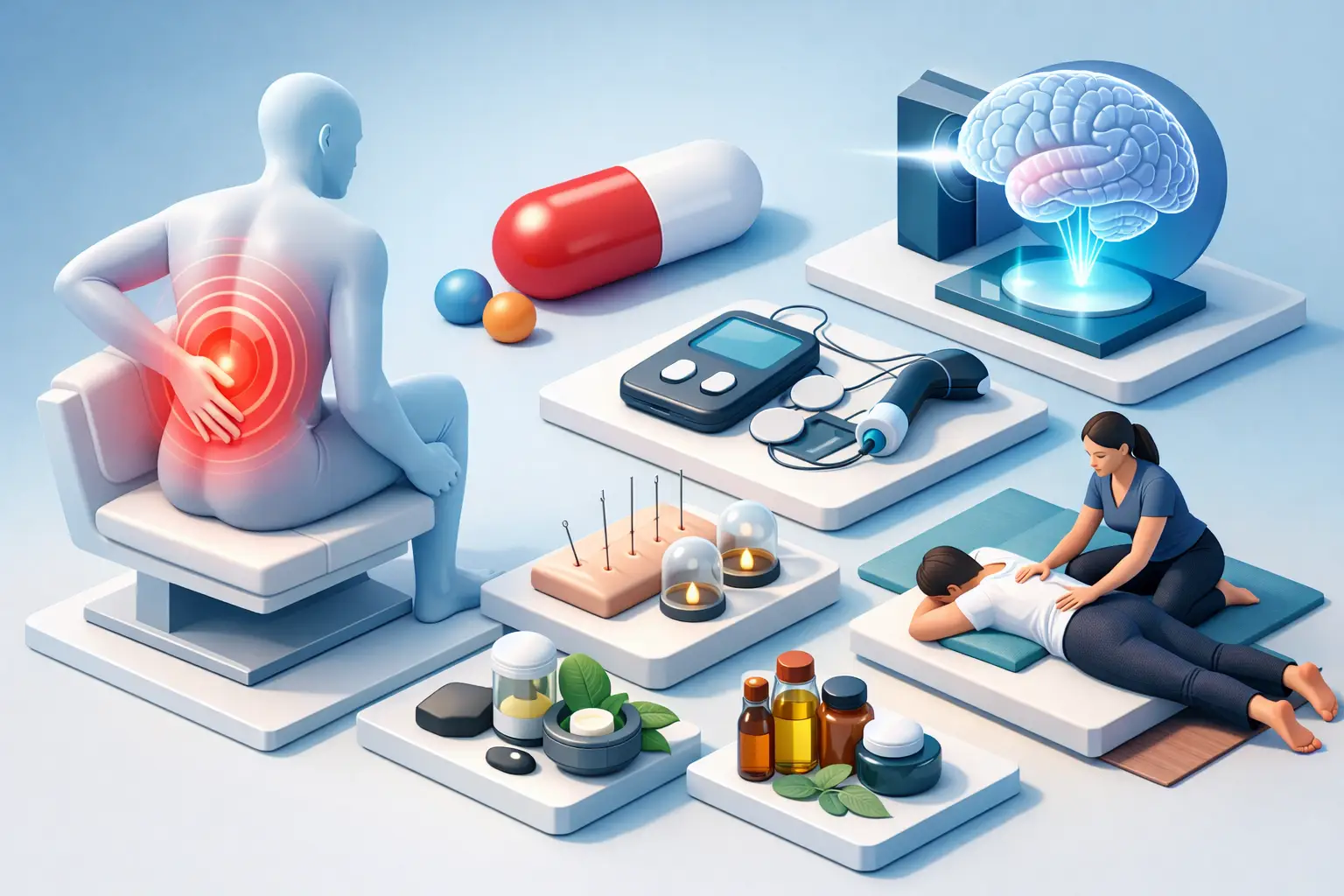
Living with persistent back pain, sciatica, arthritis, migraines, or pain after surgery can make every decision feel smaller: whether to take the stairs, sit through a work meeting, drive across town, or sleep through the night. For many patients, the goal of chronic pain without opioids is not simply to avoid a medication. It is to find care that reduces pain while helping them move, work, rest, and participate in life again.
Opioids may have a limited role in carefully selected situations, particularly for acute, severe pain. But they are rarely a complete long-term answer for chronic pain. Tolerance, side effects, dependence, constipation, mental fog, and the risk of overdose can make ongoing opioid therapy a difficult trade-off. More importantly, opioids often reduce the sensation of pain without identifying why it continues.
A more effective path starts with a precise diagnosis and a plan built around the source of symptoms, the affected structures, and the patient’s personal goals.
Why chronic pain needs more than symptom control
Chronic pain is not one condition. Low back pain may arise from a disc problem, irritated spinal joints, spinal stenosis, sacroiliac joint dysfunction, nerve compression, or a combination of factors. Knee pain may reflect arthritis, inflammation, instability, or pain referred from another area. A headache that feels like a migraine may require a different approach than pain caused by neck muscle tension or occipital nerve irritation.
That is why a treatment plan should not begin and end with a prescription. It should begin with a thorough evaluation. A pain specialist considers when the pain began, what makes it worse or better, prior injuries or surgeries, imaging findings, neurologic symptoms, medication history, and how the condition is affecting daily function.
The goal is not to promise that every patient will become completely pain-free. Some chronic conditions cannot be eliminated entirely. The goal is to reduce pain to a more manageable level, improve physical capacity, and help patients regain as much independence as possible with the lowest necessary treatment burden.
Chronic pain without opioids starts with a targeted diagnosis
Pain is personal, but it is not vague. When a patient can point to a particular pattern of pain, a careful diagnostic process can often identify the nerves, joints, muscles, discs, or other structures contributing to it.
Image-guided diagnostic injections can be especially useful when scans alone do not tell the whole story. For example, a carefully placed injection may help determine whether pain is coming from a facet joint in the spine, the sacroiliac joint, or an irritated nerve root. This information can prevent treatment from becoming a cycle of trial and error.
At Global Pain Solutions, individualized planning is central to interventional pain care. Dr. Nikesh Seth evaluates the full clinical picture rather than relying on a one-size-fits-all medication strategy. For a working professional, success may mean sitting comfortably through a full day. For an older adult, it may mean walking safely, staying active, and maintaining independence. Those goals should shape the plan.
Treatment options depend on the source of pain
Non-opioid care is not a single treatment. It is a range of evidence-based options that may be used alone or in combination. The most appropriate choice depends on the diagnosis, the severity of symptoms, medical history, and response to prior care.
Image-guided injections for inflammation and nerve pain
Epidural steroid injections can help reduce inflammation around irritated spinal nerves. They may be considered for certain cases of sciatica, radicular pain, disc-related symptoms, or spinal stenosis. These injections are not a cure for every back problem, and relief may be temporary for some patients. Still, when used appropriately, they can reduce pain enough to make movement, rehabilitation, and daily activities more manageable.
Joint injections may help patients with arthritis-related pain in areas such as the knee, shoulder, hip, or spine. Viscosupplementation may also be an option for selected patients with knee osteoarthritis. These treatments work best when they are matched to the right condition rather than used as a generic response to any joint pain.
Radiofrequency ablation for longer-lasting relief
For certain patients with facet joint pain or sacroiliac joint pain, radiofrequency ablation may offer longer-lasting improvement. This minimally invasive procedure uses controlled heat to interrupt pain signals from specific nerves after diagnostic blocks have confirmed the likely source.
Radiofrequency ablation does not repair arthritis or reverse spinal changes. It can, however, reduce pain transmission for many months in appropriate candidates. If nerves regenerate over time and pain returns, the procedure may sometimes be repeated after reassessment.
Neuromodulation for persistent nerve-related pain
Spinal cord stimulation may be considered when chronic pain remains severe despite conservative care and less invasive procedures, particularly for selected patients with post-surgical pain or neuropathic pain. A small device sends mild electrical signals that alter how pain messages are processed before they reach the brain.
A trial period allows the patient and physician to assess whether stimulation offers meaningful relief before a permanent device is placed. This is an important example of why personalized pain management matters: an advanced therapy is valuable only when it fits the patient, diagnosis, and goals.
Additional options for complex pain conditions
Some pain conditions require a different strategy. Sympathetic blocks may be used for certain nerve-related pain syndromes. Ketamine infusions may be considered for carefully evaluated patients with treatment-resistant pain. Migraine Botox can help reduce the frequency of chronic migraines for qualified patients.
Medication management also remains part of responsible care. Non-opioid medications may include anti-inflammatory drugs, topical therapies, certain nerve pain medications, or other options based on the underlying problem and a patient’s health history. Medication should support the plan, not become the entire plan.
Movement and rehabilitation are part of pain care
When pain has lasted for months or years, the body often adapts in unhelpful ways. Muscles may weaken, joints may stiffen, and normal movement can start to feel threatening. Avoiding activity entirely can worsen this cycle, even when the original injury has improved.
The answer is not to push through severe pain. It is to return to movement in a structured, realistic way. Chiropractic care, physical rehabilitation, targeted strengthening, mobility work, pacing strategies, and ergonomic changes can all support recovery when clinically appropriate.
Interventional procedures may make rehabilitation more productive by lowering pain enough for patients to participate. In turn, better strength and movement patterns may help extend the benefits of procedures. Neither approach should be viewed as a shortcut or a replacement for the other.
What patients should expect from an opioid-sparing plan
A thoughtful pain plan takes time to refine. Some patients respond well to one targeted procedure and a rehabilitation program. Others have several pain generators and need care in stages. A person with severe spinal degeneration, for example, may have both nerve pain down the leg and painful arthritic joints in the lower back. Treating only one source may help, but may not address every symptom.
Progress should be measured by more than a pain score. Better sleep, fewer missed workdays, walking farther, using less medication, and returning to hobbies are meaningful outcomes. Follow-up visits allow the plan to change as symptoms, function, and goals change.
Patients should also seek urgent evaluation for new bowel or bladder changes, sudden weakness, saddle numbness, fever with severe back pain, or pain following significant trauma. These symptoms may require immediate medical attention rather than routine pain management.
A more sustainable way forward
Choosing chronic pain care without long-term opioids does not mean accepting unnecessary suffering. It means looking beyond temporary symptom suppression toward treatments that can address inflammation, nerve irritation, joint dysfunction, and other identifiable causes of pain.
The right next step is a specialist evaluation that takes your symptoms seriously, explains the available options clearly, and builds a plan around what you want your life to look like. Relief may come in measured steps, but each step toward better movement, steadier sleep, and greater confidence can be meaningful.