
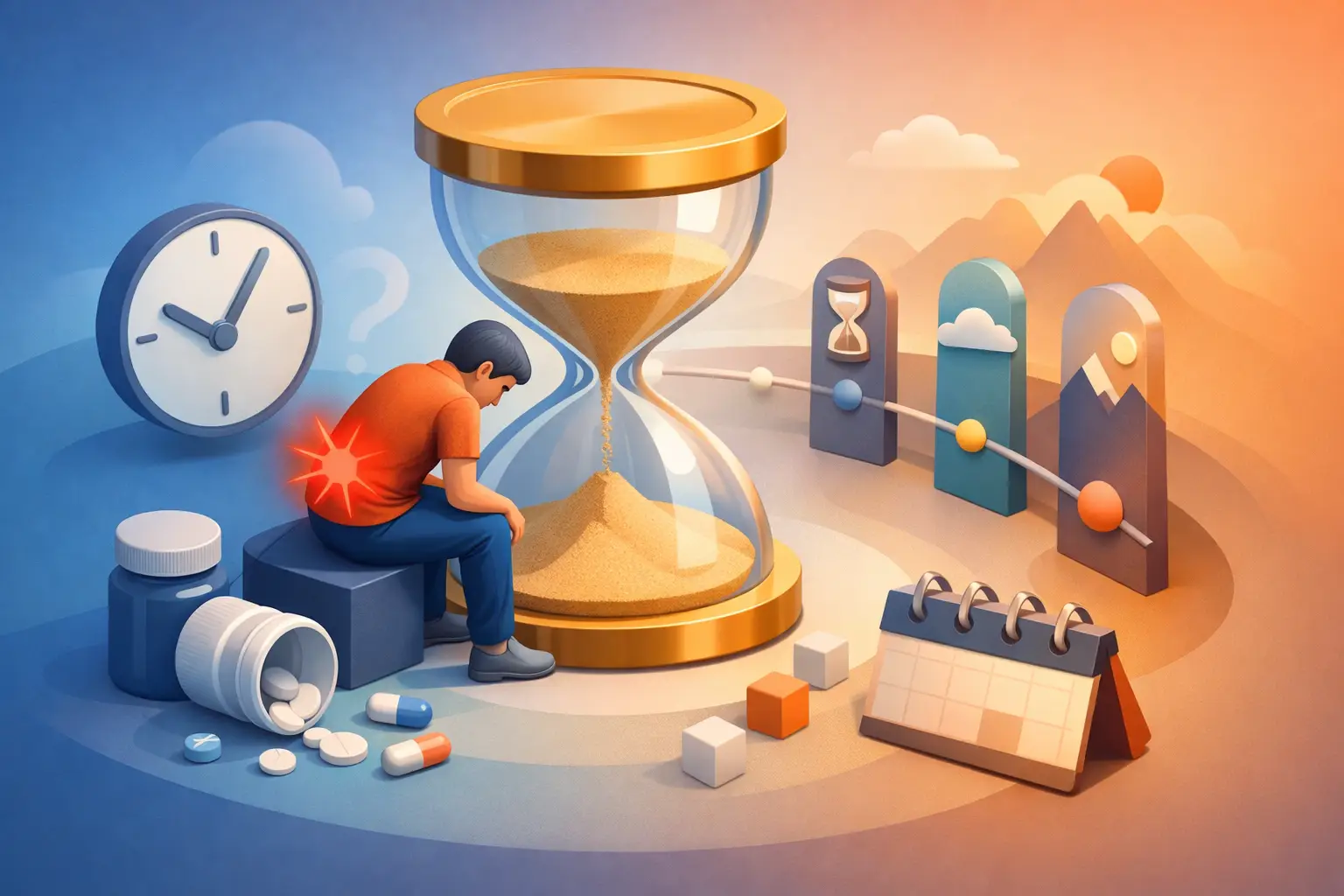
One of the hardest parts of living with ongoing pain is not knowing the timeline. Patients often ask, how long does chronic pain syndrome last, because the uncertainty can be just as disruptive as the pain itself. Work, sleep, movement, mood, and daily routines all start to revolve around a condition that may not follow a simple or predictable course.
The honest answer is that chronic pain syndrome can last for months, years, or longer if the underlying drivers are not properly identified and treated. For some people, symptoms improve with the right combination of medical care, physical rehabilitation, and lifestyle changes. For others, pain becomes more persistent and complex, especially when nerve irritation, inflammation, prior injury, spinal problems, arthritis, or post-surgical changes are involved.
How long does chronic pain syndrome last in real life?
By definition, chronic pain is pain that continues for more than 3 months or beyond the expected healing period. That does not mean every case follows the same path. Some patients experience a gradual reduction in symptoms over time. Others have pain that fluctuates, with better weeks and painful flare-ups. A smaller group develops pain that becomes deeply entrenched and starts affecting the nervous system, sleep patterns, stress response, and overall function.
Chronic pain syndrome is more than pain that has simply lasted a long time. It often includes the broader effects of ongoing pain on the body and mind, such as fatigue, reduced mobility, anxiety, depression, trouble concentrating, and loss of function. When these layers build on each other, the condition may persist longer than the original injury or diagnosis would suggest.
That is why there is no universal timeline. Duration depends on what is causing the pain, how long it has been present, whether nerves are involved, how much function has been lost, and whether treatment is addressing the source of the problem instead of only trying to dull symptoms.
What affects how long chronic pain syndrome lasts?
The biggest factor is the underlying cause. Pain from an irritated spinal nerve, advanced arthritis, failed back surgery, complex regional pain syndrome, migraine disease, or a degenerative joint condition does not behave the same way. Some sources of pain are inflammatory. Others are mechanical. Some are neuropathic, meaning the nerves themselves are sending pain signals abnormally. Each type has a different prognosis and often requires a different treatment strategy.
Timing also matters. Pain that has been present for six months is not always as difficult to reverse as pain that has been present for several years. The longer pain continues unchecked, the more likely the nervous system is to become sensitized. In plain terms, the body can become more reactive to pain signals, making discomfort feel more intense and more persistent.
Another major factor is whether treatment has been precise. Many patients have already tried rest, oral medications, or general physical therapy before seeing a pain specialist. Those options can be appropriate first steps, but they do not always identify the true pain generator. If the source is a specific spinal joint, compressed nerve root, inflamed sacroiliac joint, damaged disc, or overactive sympathetic nerve pathway, treatment needs to be targeted to that structure.
General health plays a role too. Sleep quality, stress, activity level, prior surgeries, obesity, diabetes, autoimmune conditions, and mental health can all influence recovery. That does not mean pain is “all in your head.” It means chronic pain is a whole-person condition, and successful treatment usually has to account for more than one variable.
Why some cases improve and others do not
One reason chronic pain syndrome lasts longer in some people is that the original diagnosis may be incomplete. For example, low back pain may actually involve the facet joints, a disc problem, sacroiliac dysfunction, spinal stenosis, or nerve compression. Knee pain may be blamed on general wear and tear when inflammation, instability, or referred pain is also part of the picture. If the wrong structure is treated, relief may be short-lived or absent.
Another issue is overreliance on medication alone. Pain medication may have a role in some treatment plans, but it rarely resolves chronic pain syndrome by itself. If the only strategy is masking symptoms, the condition can continue progressing while function declines. This is one reason many patients eventually seek more advanced, physician-led care focused on diagnosis, targeted intervention, and long-term improvement rather than temporary suppression.
There is also a functional piece. When pain leads to less movement, muscles weaken, joints stiffen, posture changes, and normal activity becomes harder. That creates a cycle where pain causes deconditioning, and deconditioning makes pain worse. Breaking that cycle often requires a coordinated plan, not a single treatment.
Can chronic pain syndrome go away?
Yes, in some cases it can improve significantly or even resolve, but that depends on the diagnosis and how the body responds to treatment. It is often more realistic to think in terms of meaningful control rather than a guaranteed permanent cure. For many patients, the goal is to reduce pain, restore function, improve sleep, increase mobility, and return to work or daily activities with far less limitation.
That goal matters. If a patient can walk comfortably, sit through the workday, sleep through the night, or stop planning life around pain flare-ups, that is a major clinical success. Complete pain elimination may happen in some cases, but improved function and quality of life are often the more useful benchmarks.
This is especially true in complex cases involving spinal degeneration, long-standing nerve pain, arthritis, or post-surgical pain. Those conditions may not disappear completely, but they can often be managed much more effectively with the right interventions.
How treatment changes the timeline
When patients ask how long does chronic pain syndrome last, the answer often changes once proper treatment begins. A well-designed pain management plan can shorten flare-ups, reduce symptom intensity, and prevent the condition from becoming more disabling.
That may include image-guided injections to calm inflamed nerves or joints, radiofrequency ablation for chronic facet-related back or neck pain, spinal cord stimulation for certain nerve pain conditions, sympathetic blocks for complex pain patterns, ketamine infusions in selected cases, medication management, and rehabilitative support to rebuild function. The right plan depends on the diagnosis, not a one-size-fits-all formula.
At Global Pain Solutions, this type of individualized approach is central to care. For patients who have been told to simply live with pain, the difference is often in the precision of the evaluation and the willingness to look deeper at why symptoms are continuing.
It is also important to understand that improvement may be gradual. Some treatments provide relief within days. Others work over weeks, and some require a series of steps to get the best result. A patient with sciatica from nerve compression may respond differently than someone with widespread pain after multiple surgeries. Good pain care is not about making unrealistic promises. It is about creating a strategy with measurable goals and adjusting it based on response.
When should you seek help for long-lasting pain?
If pain has lasted more than 3 months, keeps returning, or is interfering with sleep, work, walking, exercise, or daily tasks, it is time for a specialist evaluation. The same is true if you have tried medications, chiropractic care, therapy, or rest without meaningful improvement. Ongoing pain is not something you should ignore simply because imaging was unclear or early treatment did not help.
You should also seek care sooner if pain is radiating down the arms or legs, associated with numbness or tingling, worsening after surgery, or becoming severe enough that your activity level is steadily shrinking. The longer function declines, the harder it can be to recover fully.
The right time to act is usually earlier than most patients think. Waiting does not always make pain easier to treat.
A better question than duration alone
How long chronic pain syndrome lasts is a reasonable question, but it is not the only one that matters. A more useful question is whether the pain has been accurately diagnosed and whether your treatment plan is built around the actual source of the problem. That is what often determines whether pain continues to control your life or starts to loosen its grip.
If you are living with persistent pain, the timeline does not have to stay open-ended. With expert evaluation, targeted treatment, and a plan centered on function, many patients can move toward steadier relief and a more normal life.