
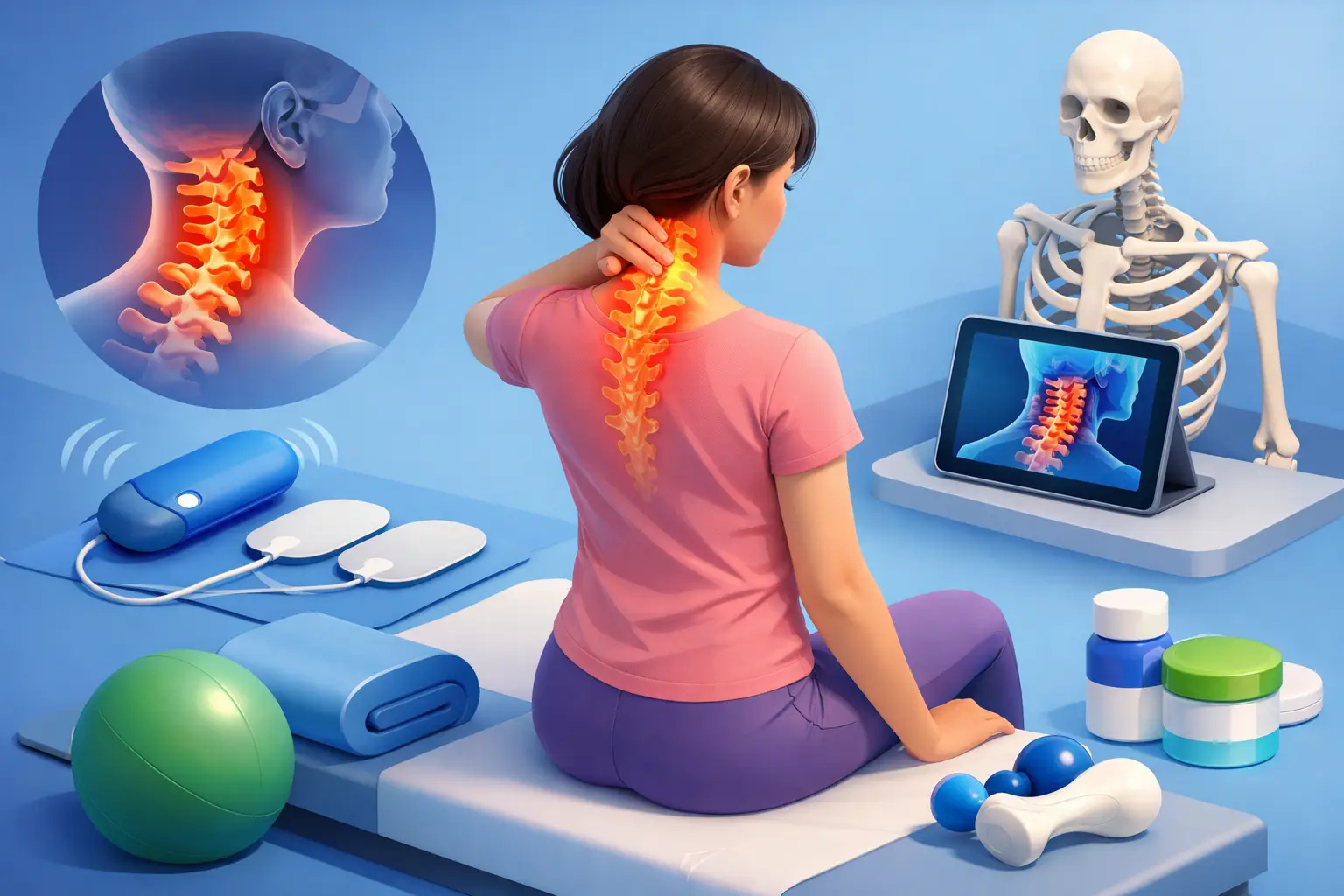
A stiff, painful neck can make ordinary tasks feel surprisingly difficult. Turning to check traffic, looking down at a laptop, sleeping comfortably, or getting through a workday may all become a source of pain. If you are looking for how to relieve cervical pain, the most useful approach is not simply to silence the discomfort for a few hours. It is to understand what is irritating the neck and choose care that helps restore movement, function, and confidence.
Cervical pain refers to pain in the neck, which includes the seven vertebrae at the top of the spine, the discs between them, the small facet joints, muscles, ligaments, and nerves. Because so many structures work together in a small area, neck pain can have several possible causes. The right relief plan depends on your symptoms, your health history, and whether pain is acute, recurring, or persistent.
Start With the Symptoms That Need Prompt Care
Most episodes of neck pain are not emergencies, but certain symptoms should not be managed with home care alone. Seek prompt medical attention for neck pain after a significant fall, car accident, or other trauma. The same is true if pain is accompanied by new arm or hand weakness, numbness that is worsening, loss of coordination, problems with balance, fever, unexplained weight loss, or changes in bowel or bladder control.
Severe headaches, vision changes, facial drooping, difficulty speaking, chest pain, or sudden dizziness also deserve immediate evaluation. These symptoms may point to a problem beyond a routine muscle strain.
For less urgent but persistent symptoms, do not wait indefinitely. Pain lasting more than a few weeks, recurring pain that disrupts sleep or work, or neck pain that shoots into the shoulder, arm, or hand should be assessed by a qualified clinician. Nerve compression, arthritic joint changes, disc-related pain, and chronic muscle guarding can all require a more targeted plan.
How to Relieve Cervical Pain at Home
For a recent flare without red-flag symptoms, gentle self-care can often reduce irritation and prevent the neck from becoming more guarded. The goal is controlled movement, not forcing the neck through pain.
Use heat or cold based on the problem
Cold can be helpful during the first day or two after a sudden strain, especially when the area feels acutely sore or inflamed. Use a wrapped cold pack for short intervals, typically 15 to 20 minutes at a time. Heat is often more helpful for tightness, muscle spasm, and chronic stiffness. A warm shower, heating pad, or moist heat can help the muscles relax before gentle movement.
Neither option is universally better. If cold makes the neck tense or heat aggravates a fresh injury, switch approaches. Protect your skin and avoid falling asleep with a heating pad in place.
Keep the neck moving gently
Complete bed rest may make cervical stiffness worse. Instead, try calm, pain-limited movement several times throughout the day. Slowly turn your head from side to side, tip each ear toward the shoulder without lifting the shoulder, and gently look up and down. Stop if movement causes sharp pain, dizziness, or pain traveling farther down the arm.
A common mistake is aggressively stretching a painful neck. Stretching should create mild tension, not a jolt of pain. When muscles are already protecting an irritated joint, disc, or nerve, forceful movement can prolong the flare.
Improve the positions you repeat every day
The neck is affected less by one imperfect posture than by hours spent in the same position. Raise your screen so you are not constantly looking down. Bring your phone closer to eye level when possible. If you work at a desk, sit back in the chair with your shoulders supported and take brief movement breaks every 30 to 60 minutes.
Sleep position matters as well. A pillow should support the natural curve of your neck without pushing your head too far forward, backward, or sideways. Side and back sleeping are usually easier on the neck than stomach sleeping, which requires prolonged rotation. Finding the right pillow is personal, so focus on alignment rather than a specific brand or material.
Consider medication carefully
Over-the-counter medications may provide short-term relief for some patients. Acetaminophen can be an option for people who cannot take anti-inflammatory medication. Nonsteroidal anti-inflammatory drugs, such as ibuprofen or naproxen, may help when inflammation is contributing to pain.
However, these medicines are not appropriate for everyone. Kidney disease, ulcers, blood-thinning medication, heart conditions, liver disease, pregnancy, and medication interactions can change what is safe. Follow label directions and consult a medical professional or pharmacist when you are unsure. Long-term reliance on pain medication without identifying the cause of symptoms rarely produces lasting improvement.
Identify What May Be Driving the Pain
Cervical pain is often described as if it were one condition. In reality, it can come from different sources that respond to different treatments.
Muscle strain and postural overload are common, particularly after extended computer use, awkward sleep, travel, or a sudden increase in activity. Facet joint arthritis can cause pain that is worse with extension or rotation, often in older adults but not exclusively. A disc bulge or herniation may irritate a cervical nerve root, leading to pain, tingling, numbness, or weakness into the shoulder, arm, or hand.
Whiplash injuries, headaches that originate from the neck, spinal stenosis, and pain after prior neck surgery add further complexity. Stress can also intensify muscle tension and pain sensitivity, but it should not be used to dismiss persistent symptoms. A thorough evaluation separates contributing factors from the primary pain generator.
When Conservative Care Is Not Enough
If careful home measures, activity adjustments, and appropriate conservative treatment have not improved your symptoms, a pain management evaluation can provide clarity. The consultation should begin with your history: where the pain starts, what movements aggravate it, whether symptoms travel into the arms, how long the problem has lasted, and how it affects sleep, work, and daily life.
A physical examination can assess strength, reflexes, sensation, range of motion, and signs of nerve irritation. Depending on the clinical picture, imaging such as X-ray or MRI may help identify arthritis, narrowing around nerves, disc changes, or other structural concerns. Imaging is useful when it answers a clinical question, not simply because a scan is available. Many adults have age-related findings on imaging that are not the source of their pain.
Treatment should match the diagnosis. Physical therapy may improve mobility, posture, muscular endurance, and confidence with movement. Chiropractic care may be appropriate for selected patients when coordinated within an individualized treatment plan. Medication management may be used selectively to help control symptoms while rehabilitation progresses.
For pain linked to inflammation around a cervical nerve, an image-guided epidural steroid injection may reduce irritation and create a window for improved activity and therapy. For carefully confirmed facet joint pain, diagnostic blocks can help identify whether those joints are the pain source. If the response supports that diagnosis, radiofrequency ablation may provide longer-lasting relief by interrupting pain signals from the targeted medial branch nerves.
These procedures are not automatic next steps, and they are not substitutes for a proper diagnosis. Their value comes from precision: selecting the right patient, the right target, and the right timing. A minimally invasive option may help someone avoid or delay more invasive treatment, but surgery is still appropriate in some cases, especially when there is progressive neurologic weakness or structural compression that requires surgical correction.
Build a Plan Around Function, Not Just Pain Scores
The most meaningful progress is often practical. You may first notice that you can drive without guarding your neck, finish a meeting without a headache, sleep through the night, return to exercise, or pick up a grandchild with less fear of triggering a flare. Pain levels matter, but function provides a fuller picture of recovery.
At Global Pain Solutions, personalized cervical pain care focuses on identifying the source of symptoms and using evidence-based, minimally invasive options when conservative measures have not been enough. For patients in Scottsdale and the greater Phoenix area, a physician-led evaluation can help clarify whether the next best step is rehabilitation, diagnostic testing, targeted intervention, or coordinated care with another specialist.
Persistent neck pain does not have to become the baseline you accept. A thoughtful evaluation and a plan tailored to your symptoms can help you move toward steadier, more comfortable days.