
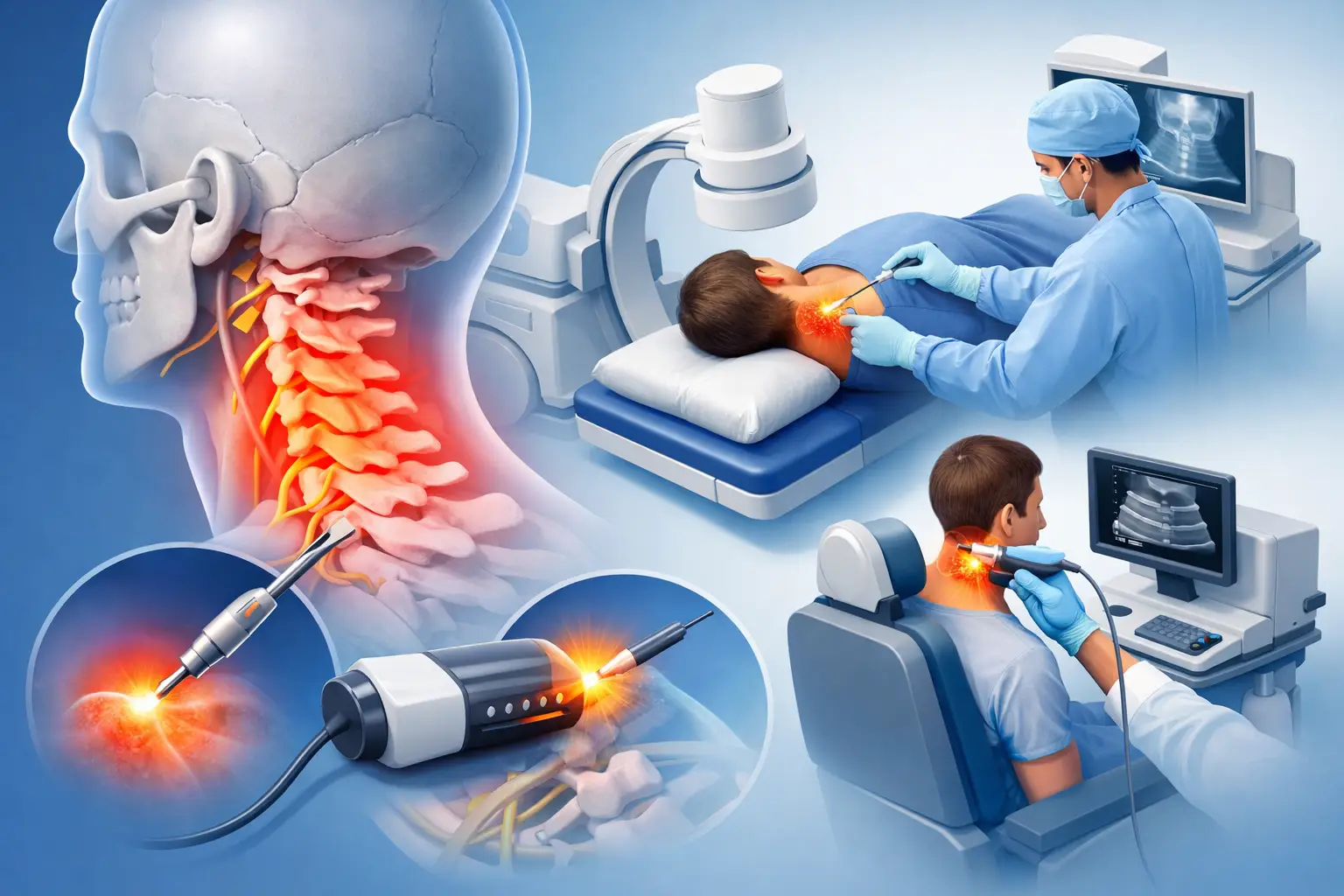
A stiff neck after a long day is one thing. Neck pain that shoots into your shoulder, triggers headaches, disrupts sleep, or makes it hard to work is something else entirely. When conservative care stops short, neck pain interventional treatments can offer a more precise path forward by targeting the structures actually generating pain instead of simply trying to dull symptoms.
For many patients, the frustration is not a lack of effort. They have already tried rest, anti-inflammatory medication, physical therapy, massage, or chiropractic care. Some feel better for a while, then the pain returns. Others never get meaningful relief at all. That is often the point when a closer, physician-led evaluation matters most.
When neck pain needs a more targeted approach
Neck pain is not a single diagnosis. It can start in the facet joints, discs, spinal nerves, muscles, ligaments, or a combination of several pain sources at once. Arthritis in the cervical spine may cause deep aching and stiffness. A pinched nerve may produce burning pain, numbness, tingling, or weakness that travels into the arm. Whiplash-related injuries can leave patients with persistent pain long after the initial event.
Because the causes vary, treatment should vary too. The right interventional plan begins with a detailed history, physical examination, and often imaging review. In some cases, the key question is not only what looks abnormal on an MRI, but what is actually responsible for the pain. Those are not always the same thing.
That distinction matters. Many adults have age-related findings on imaging that are not the true pain generator. A careful pain specialist uses clinical findings, function, and sometimes diagnostic injections to identify the source before recommending a procedure.
What are neck pain interventional treatments?
Neck pain interventional treatments are minimally invasive, image-guided procedures designed to diagnose or relieve pain coming from specific structures in the cervical spine and surrounding tissues. Rather than relying only on oral medication, these treatments deliver therapy closer to the problem area.
This approach can serve different goals. In some cases, the procedure is diagnostic and helps confirm whether a particular joint or nerve is involved. In others, it is therapeutic and intended to reduce inflammation, interrupt pain signaling, or create longer-lasting relief so the patient can move better and return to normal activity.
Interventional care does not mean every patient needs a procedure, and it does not replace a full treatment plan. It works best as part of an individualized strategy that may also include physical therapy, home exercise, medication management, and activity modification.
Common interventional options for neck pain
Cervical epidural steroid injections
When neck pain is tied to nerve irritation, a cervical epidural steroid injection may help calm inflammation around the affected nerve roots. This is often considered when patients have radiating arm pain, tingling, numbness, or symptoms related to a disc issue or foraminal narrowing.
The goal is not to mask pain indefinitely. It is to reduce inflammation enough to improve function, lower symptom intensity, and create a better window for rehabilitation. Some patients get substantial relief for months. Others experience more modest improvement. Response depends on the underlying condition, the severity of nerve irritation, and how long symptoms have been present.
Facet joint injections and medial branch blocks
The small joints in the back of the neck, called facet joints, are a common source of chronic cervical pain, especially in patients with arthritis, repetitive strain, or pain after a motor vehicle accident. Facet-mediated pain often feels worse with extension, rotation, or looking up.
A facet joint injection or medial branch block can help determine whether those joints are the source. If pain improves significantly after the diagnostic phase, that information can guide the next step in treatment.
Radiofrequency ablation
For patients who respond well to diagnostic medial branch blocks, radiofrequency ablation may provide longer relief. This procedure uses controlled heat to interrupt pain signals from the nerves supplying the painful facet joints.
Radiofrequency ablation is often a strong option for chronic neck pain caused by cervical facet arthritis or persistent pain after whiplash injury. It does not cure degeneration, but it can reduce pain for many months and help patients move with less restriction. The effect is not permanent because nerves can regenerate over time, but repeat treatment may be appropriate for the right patient.
Trigger point injections
Not all neck pain comes directly from the spine. Muscular pain in the neck and upper back can create significant stiffness, soreness, and referred pain into the head or shoulders. Trigger point injections may help when tight, irritable muscle bands are contributing to ongoing discomfort.
These injections are usually not the main answer for more complex structural pain, but they can play a useful supporting role when muscle spasm is limiting progress.
Who may be a candidate for interventional treatment?
In general, these procedures are considered when neck pain has lasted beyond the expected healing period, conservative treatment has not provided enough relief, or symptoms suggest a specific pain source that can be targeted directly. Candidates often include patients with chronic arthritis-related neck pain, cervical radiculopathy, post-injury pain, or pain that has begun to interfere with work, sleep, driving, exercise, or daily activity.
There is no single timeline that fits everyone. A patient with severe radiating arm pain and weakness may need earlier intervention than someone with mild intermittent stiffness. Likewise, a person hoping to avoid surgery may pursue interventional care sooner if imaging and symptoms point to a treatable source.
At the same time, not every patient with neck pain needs a procedure. If symptoms are improving with conservative care, observation and rehabilitation may be the better course. Good interventional medicine is selective, not automatic.
What to expect from the process
One reason patients delay treatment is concern that procedures will be complicated or overwhelming. In reality, most interventional spine procedures are performed on an outpatient basis and are designed to be as precise and efficient as possible. Imaging guidance helps ensure accurate needle placement and improves both safety and effectiveness.
The process usually starts with a consultation focused on symptoms, prior treatments, daily limitations, and diagnostic findings. From there, a treatment plan is built around the likely pain generator. Sometimes that means one carefully chosen procedure. Sometimes it means using a diagnostic injection first before moving to something like radiofrequency ablation.
Recovery is often relatively quick, though the exact experience varies by procedure. Some patients feel sore for a day or two. Others notice gradual improvement over several days as inflammation decreases. Results are not always immediate, and realistic expectations are important.
The trade-offs patients should understand
Interventional treatment can be highly effective, but it is not a miracle fix. The best results usually come when the diagnosis is accurate and the procedure matches the pain source. Even then, relief may be partial rather than complete.
There are also trade-offs. Steroid-based injections can reduce inflammation, but they are not something to repeat endlessly without a clear reason. Radiofrequency ablation can last longer, but it is only appropriate when diagnostic blocks support the diagnosis. Trigger point work may help muscle pain, but it will not solve nerve compression.
This is where individualized planning matters. An evidence-based physician should explain not only what a procedure can do, but also what it cannot do, how long relief may last, and whether the treatment is intended to diagnose, calm inflammation, or provide longer-term pain control.
Why precision matters in chronic neck pain care
Patients with persistent neck pain are often told to keep trying the same general strategies, even when those strategies have already failed. That can leave people stuck between temporary medication use and the fear of surgery. Interventional care offers another option: precise, minimally invasive treatment aimed at the source of pain.
At a specialty practice such as Global Pain Solutions, that precision is paired with a broader goal. Relief matters, but so does function. The right treatment plan should help you turn your head more comfortably, sit through the workday, sleep better, return to activity, and rely less on medications that do not address the root problem.
For patients in Scottsdale and the greater Phoenix area, that kind of care can make a meaningful difference when neck pain has stopped feeling like a short-term issue and started affecting everyday life.
If your neck pain has lingered despite therapy, medications, or time, the next step may not be more of the same. A targeted evaluation can clarify what is driving the pain and whether a minimally invasive procedure could help you move forward with more comfort and confidence.