
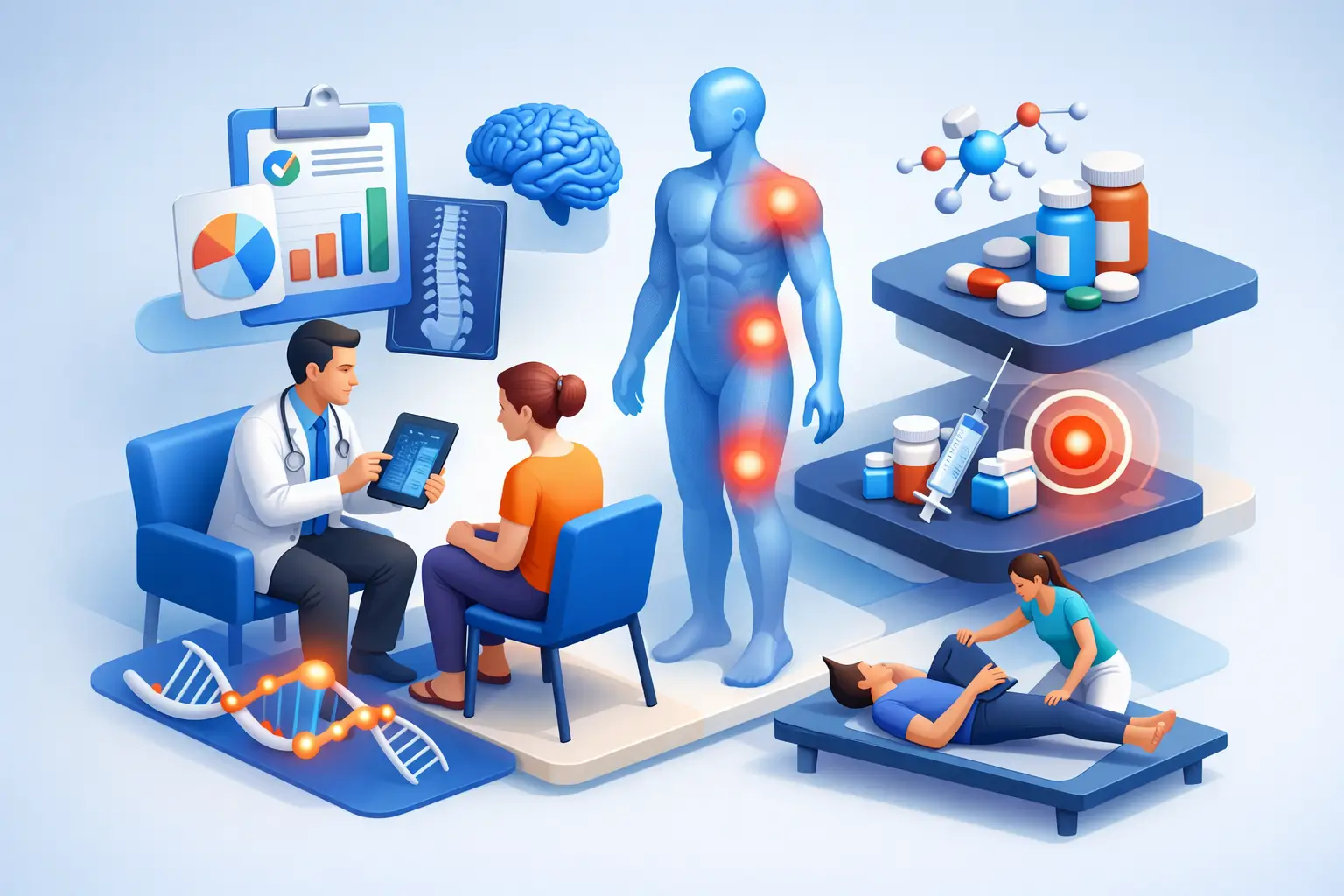
A painful back that worsens after sitting, a knee that limits every stair, or burning leg pain that disrupts sleep may all be described as “chronic pain.” But those symptoms do not share one cause or one appropriate treatment. Personalized pain treatment plans begin by identifying what is driving the pain, how it affects daily life, and which options are most likely to improve function without defaulting to long-term opioid use or unnecessary surgery.
For people who have already tried rest, medication, physical therapy, or general medical care without meaningful relief, a more precise approach can change the next step. The goal is not simply to lower a number on a pain scale. It is to help patients walk farther, work more comfortably, sleep better, care for family, and return to the activities that pain has taken away.
Why a Standard Pain Plan Often Falls Short
Pain is personal, but it is also complex. Two people with similar MRI findings may have very different symptoms, physical limitations, medical histories, and treatment goals. One person may have inflammation around a spinal nerve that responds well to an epidural steroid injection. Another may have facet joint pain caused by arthritis, where radiofrequency ablation could be a better fit.
A generalized plan can miss those distinctions. It may focus only on medication, treat the location of pain rather than its source, or recommend surgery before less invasive options have been fully evaluated. Medication can have an appropriate role in pain care, especially when used carefully and monitored closely. However, medication alone may not address joint inflammation, nerve irritation, vertebral compression fractures, post-surgical scar-related pain, or other structural contributors.
An individualized plan also recognizes that pain has consequences beyond discomfort. Reduced movement can weaken muscles and worsen stiffness. Interrupted sleep can lower energy and mood. Avoiding work, exercise, or social events can gradually affect independence and quality of life. A meaningful treatment strategy accounts for the full impact of pain, not just the diagnosis written on a chart.
What Personalized Pain Treatment Plans Include
A well-designed plan is built in stages. It begins with careful evaluation, continues with targeted treatment when appropriate, and evolves based on how the patient responds. There is no responsible one-size-fits-all formula, and there is no guarantee that one procedure will resolve every source of pain. The value of personalization is that each decision has a clear clinical purpose.
A detailed diagnostic evaluation
The first step is a thorough conversation and examination. A pain management specialist considers when symptoms started, where they travel, what movements trigger them, what prior treatments have been attempted, and how pain affects work, sleep, mobility, and daily responsibilities.
Imaging studies, prior records, and diagnostic findings are reviewed in context. An MRI or X-ray can be helpful, but an image alone does not always explain symptoms. Many adults have age-related changes on imaging without significant pain. The physical examination and symptom pattern help determine whether a finding is likely to be clinically relevant.
In some cases, diagnostic injections provide additional clarity. Temporarily numbing a suspected pain generator can help confirm whether a particular joint, nerve, or spinal structure is contributing to symptoms. This information can prevent treatment from being directed at the wrong area.
Clear goals based on function
Pain reduction matters, but functional goals make treatment more practical. A patient with sciatica may want to sit through a workday or drive without frequent stops. Someone with knee arthritis may want to climb stairs, travel, or play with grandchildren. A person with chronic migraines may be focused on reducing the number of headache days that force them to miss work.
These goals help guide clinical decisions and make progress easier to measure. Sometimes the right next step is an image-guided procedure. Other times it is a coordinated plan that includes medication management, chiropractic care, a home exercise program, or referral back to physical therapy after pain is controlled enough to participate more fully.
Treatment matched to the pain source
Interventional pain management uses targeted, minimally invasive treatments to address specific pain pathways. The best option depends on the diagnosis, severity of symptoms, previous care, overall health, and patient preferences.
For spinal pain with radiating leg or arm symptoms, an epidural steroid injection may reduce inflammation around an irritated nerve root. For pain arising from arthritic facet joints, medial branch blocks and radiofrequency ablation may provide longer-lasting relief by interrupting pain signals from the affected nerves. Joint injections or viscosupplementation may be considered for certain arthritis-related symptoms.
Other conditions require different tools. Sympathetic blocks may be appropriate for selected nerve-related pain conditions. Kyphoplasty can help stabilize painful vertebral compression fractures in qualifying patients. Spinal cord stimulation may be considered for persistent neuropathic pain or post-surgical pain when more conservative options have not provided sufficient relief. Ketamine infusions, migraine Botox, and carefully managed medications may also have a role for specific patients.
The right recommendation depends on the diagnosis. A procedure that helps one type of pain may offer little benefit for another, which is why a precise evaluation matters before treatment begins.
How Treatment Plans Change Over Time
Personalized care is not a single appointment or procedure. It is a process of monitoring results and responding thoughtfully. After treatment, the key questions are straightforward: Did pain decrease? Did walking, sleeping, working, or exercising become easier? How long did relief last? Were there side effects or new symptoms?
The answers shape what happens next. If a targeted injection produces substantial but temporary relief, it may confirm the pain generator and point toward a longer-lasting treatment such as radiofrequency ablation. If an intervention does not provide the expected benefit, the plan should be reassessed rather than repeated automatically. There may be another pain source, a different diagnosis, or a need to adjust the overall strategy.
This approach also supports safer medication decisions. For some patients, medication can provide short-term symptom control or support recovery while other therapies take effect. For others, reducing reliance on opioid medication is a central goal. A physician-led plan can evaluate benefits, risks, interactions, and alternatives while keeping patient safety at the center of care.
When a Personalized Approach Is Especially Valuable
Specialized pain care can be particularly helpful when symptoms have continued for months, interfere with everyday function, or have not improved with standard conservative treatment. It can also be valuable for patients with more than one source of pain, such as lumbar arthritis alongside nerve-related leg pain, or a prior surgery combined with ongoing symptoms.
Patients should seek timely evaluation for concerning changes, including new weakness, loss of bowel or bladder control, fever with severe back pain, unexplained weight loss, or pain after significant trauma. Those symptoms may require urgent assessment rather than routine pain management.
For non-emergency chronic pain, the most productive consultation is one that is honest and specific. Bring prior imaging and treatment records when available, describe which treatments helped and which did not, and explain what pain is preventing you from doing. Those details help create a plan grounded in your real life rather than a generic checklist.
Choosing Care That Looks Beyond Symptom Masking
A personalized plan should balance medical evidence with individual needs. Some patients need a short, focused intervention to return to activity. Others require a staged approach because their pain has multiple causes or has persisted long enough to affect strength, sleep, and confidence in movement. Neither situation is a failure. They simply call for different levels of care.
At Global Pain Solutions, treatment planning is centered on advanced diagnostics, image-guided procedures, and compassionate physician oversight. The purpose is to pursue the least invasive effective option while preserving future choices if a higher level of care becomes necessary.
Living with pain can make every decision feel smaller and every task feel harder. The right plan creates a path forward by replacing guesswork with a clearer understanding of the problem, realistic treatment options, and goals that bring daily life back within reach.