
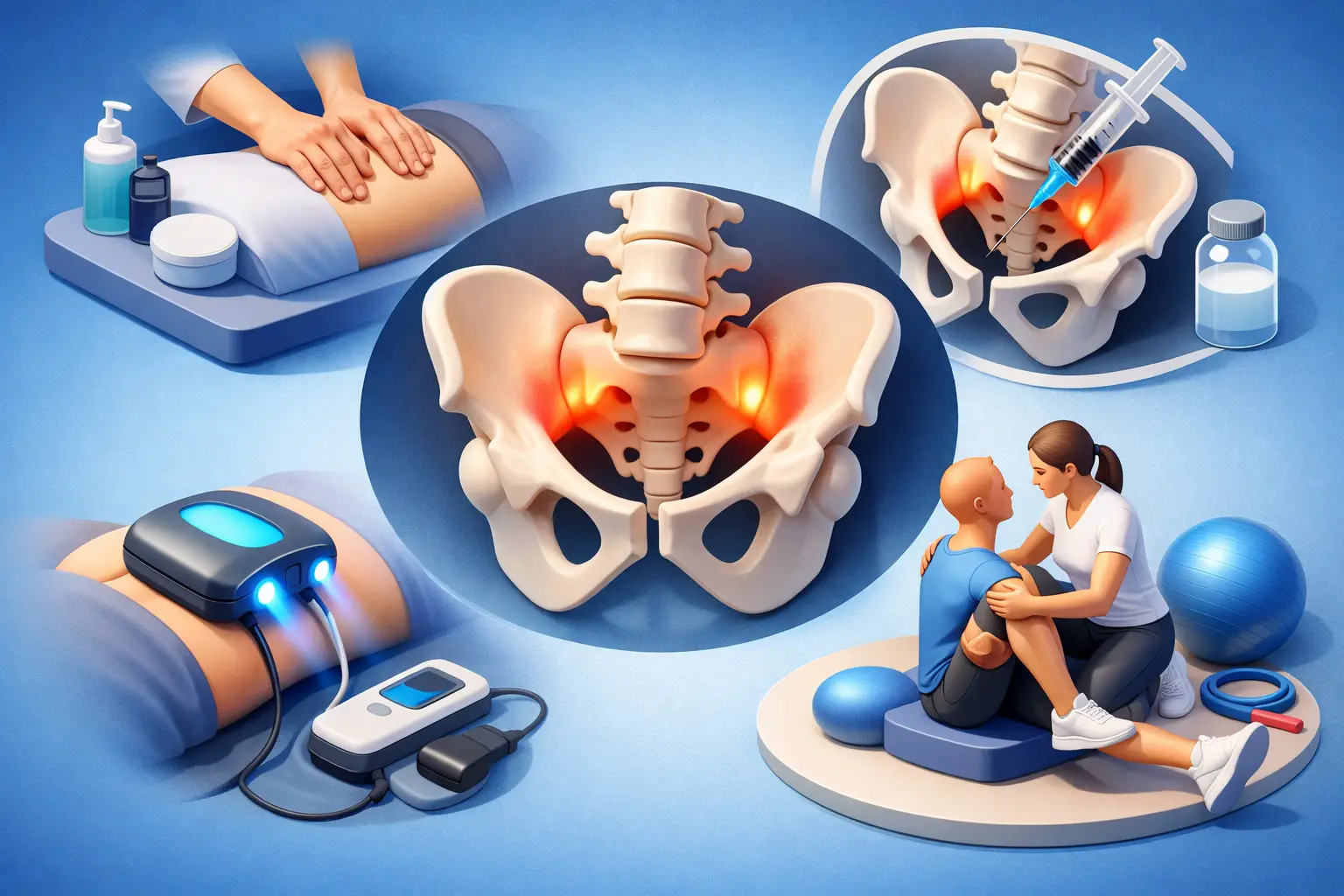
A sharp pain near one side of the low back can make standing from a chair, climbing stairs, getting in and out of a car, or rolling over in bed unexpectedly difficult. For many patients, the source is not a spinal disc at all. Sacroiliac joint dysfunction treatment begins with identifying whether the SI joint, where the spine meets the pelvis, is contributing to pain and then choosing care that supports lasting movement and function.
The sacroiliac joints are small but essential. They transfer force between the upper body and legs with every step, bend, and change in position. When one or both joints become irritated or move abnormally, pain can feel very similar to lumbar spine, hip, or sciatic pain. That overlap is why a precise evaluation matters before pursuing any procedure.
What Sacroiliac Joint Pain Can Feel Like
SI joint dysfunction most often causes pain below the beltline, commonly on one side of the body. Some people feel pain in the buttock, outer hip, groin, upper thigh, or back of the leg. Unlike classic sciatica, SI pain does not always travel below the knee, although symptoms can vary.
Pain may worsen after prolonged sitting or standing, walking long distances, climbing stairs, pivoting, or bearing weight on one leg. Patients sometimes describe a catching sensation, stiffness after sitting, or pain when turning in bed. Pregnancy, prior low back surgery, arthritis, a fall, uneven gait, and repetitive physical demands can all affect the joint.
These symptoms alone do not confirm an SI joint diagnosis. Disc problems, spinal stenosis, hip arthritis, muscle conditions, and nerve irritation can create similar patterns. A physician-led assessment should consider the full picture rather than treating a pain location as a diagnosis.
How Sacroiliac Joint Dysfunction Is Diagnosed
A careful diagnosis usually starts with a discussion of symptoms, prior injuries, medical history, and treatments already tried. The physical exam includes targeted movement and stress tests designed to reproduce familiar pain around the SI joint. A neurologic exam can help identify signs that point instead to a spinal nerve problem.
X-rays, MRI, or CT imaging may be used to evaluate arthritis, alignment, prior surgical changes, fractures, hip conditions, or other possible pain generators. Imaging can be valuable, but it does not always show the cause of SI pain. Degenerative changes are common, including in people without symptoms.
For that reason, an image-guided diagnostic SI joint injection is often one of the most useful tools. A small amount of anesthetic is placed directly into the suspected joint using fluoroscopic guidance. Meaningful short-term pain relief after the injection supports the joint as a primary pain source. This step helps prevent treatment based on guesswork and informs the next decision.
Sacroiliac Joint Dysfunction Treatment Starts Conservatively
The right treatment depends on the cause of pain, its severity, the patient’s health, and how symptoms affect daily life. Many patients improve with a focused conservative plan, particularly when symptoms are recent or related to strain, altered movement, or muscle imbalance.
Physical therapy can improve pelvic and core stability, hip strength, flexibility, and body mechanics. The goal is not simply to stretch a painful area. A well-designed program addresses the way the pelvis, hips, and lumbar spine work together during walking, lifting, and transitions. Activity modification can reduce repeated irritation while recovery is underway, without requiring complete inactivity.
Anti-inflammatory medications or other non-opioid medication options may be appropriate for some patients, depending on their health history. A supportive SI belt may provide temporary stability, especially for certain cases of pelvic instability or pregnancy-related symptoms. Chiropractic care may also be considered when clinically appropriate as part of a coordinated plan.
Conservative care is not an all-or-nothing test of endurance. If pain remains significant despite an appropriate trial, or if it prevents rehabilitation and normal movement, interventional treatment may offer a more direct next step.
Image-Guided Sacroiliac Joint Dysfunction Treatment
SI Joint Injections
An SI joint injection combines a local anesthetic with a corticosteroid medication when inflammation is believed to be a meaningful contributor. Fluoroscopic imaging allows the physician to place medication accurately within the joint rather than relying on surface landmarks alone.
For some patients, an injection provides relief long enough to participate more effectively in therapy, restore activity, and break a cycle of guarded movement. The degree and duration of relief vary. An injection is not necessarily a permanent solution, and repeated injections are considered carefully to balance potential benefit with the limits of steroid exposure.
Most patients return home the same day. Temporary soreness at the injection site or brief changes in symptoms can occur. A pain specialist will review individual risks, including medication allergies, diabetes considerations, bleeding risk, and active infection before treatment.
Radiofrequency Ablation
When diagnostic testing and prior injections suggest SI joint pain, but relief has not lasted, radiofrequency ablation may be an option for selected patients. This minimally invasive procedure uses controlled heat to interrupt pain signals from specific nerves that supply the SI joint region.
Radiofrequency ablation does not repair the joint itself. Instead, it aims to reduce the pain signals that prevent normal activity. Before recommending it, the physician typically uses diagnostic nerve blocks to determine whether the targeted nerves are likely to respond. Patients who benefit may experience months of pain reduction, though nerves can regenerate and results differ from person to person.
The procedure is performed with image guidance and usually involves a short recovery period. It can be especially valuable for patients seeking to reduce reliance on medications while improving their ability to walk, work, exercise, or sleep more comfortably.
When Surgery May Be Considered
Minimally invasive SI joint fusion may be considered when a patient has confirmed SI joint dysfunction, persistent disabling pain, and insufficient relief from comprehensive nonsurgical care. The purpose is to stabilize the joint, not simply to suppress symptoms.
Surgery is not the first choice for most people. It requires thoughtful confirmation of the diagnosis and a discussion of recovery, potential complications, other pain sources, and realistic functional goals. A patient with untreated hip disease, nerve compression, or widespread pain may need a different approach. The best treatment is the least invasive option that appropriately addresses the source of pain.
Why Personalized Care Changes the Outcome
SI joint pain is often complicated by more than one issue. A patient may have SI dysfunction alongside lumbar arthritis, a prior fusion, hip degeneration, deconditioning, or myofascial pain. Treating only one finding on an MRI may leave the actual driver of symptoms unaddressed.
At Global Pain Solutions, care is built around a detailed evaluation, targeted diagnostics, and image-guided treatment when indicated. The focus is on helping patients move with greater confidence and less pain while avoiding unnecessary surgery and long-term opioid dependence whenever possible.
A treatment plan should also reflect the patient’s life. A working professional who cannot tolerate car travel, an older adult worried about falls, and an active person limited by walking pain may have the same diagnosis but different priorities. Measuring progress by improved sleep, walking tolerance, work capacity, and independence gives treatment a practical purpose.
When to Seek Evaluation
Schedule an evaluation for persistent pain below the beltline that has not improved with rest or basic care, especially when it disrupts mobility, work, sleep, or daily tasks. Prompt medical attention is needed for new leg weakness, loss of bowel or bladder control, fever, unexplained weight loss, or severe pain following major trauma.
Living with ongoing low back or pelvic pain can gradually shrink a person’s routine. A careful evaluation can clarify whether the SI joint is truly involved and identify options that fit both the diagnosis and the life you want to return to. Meaningful relief often starts with a precise answer, followed by treatment that gives movement a chance to feel natural again.