
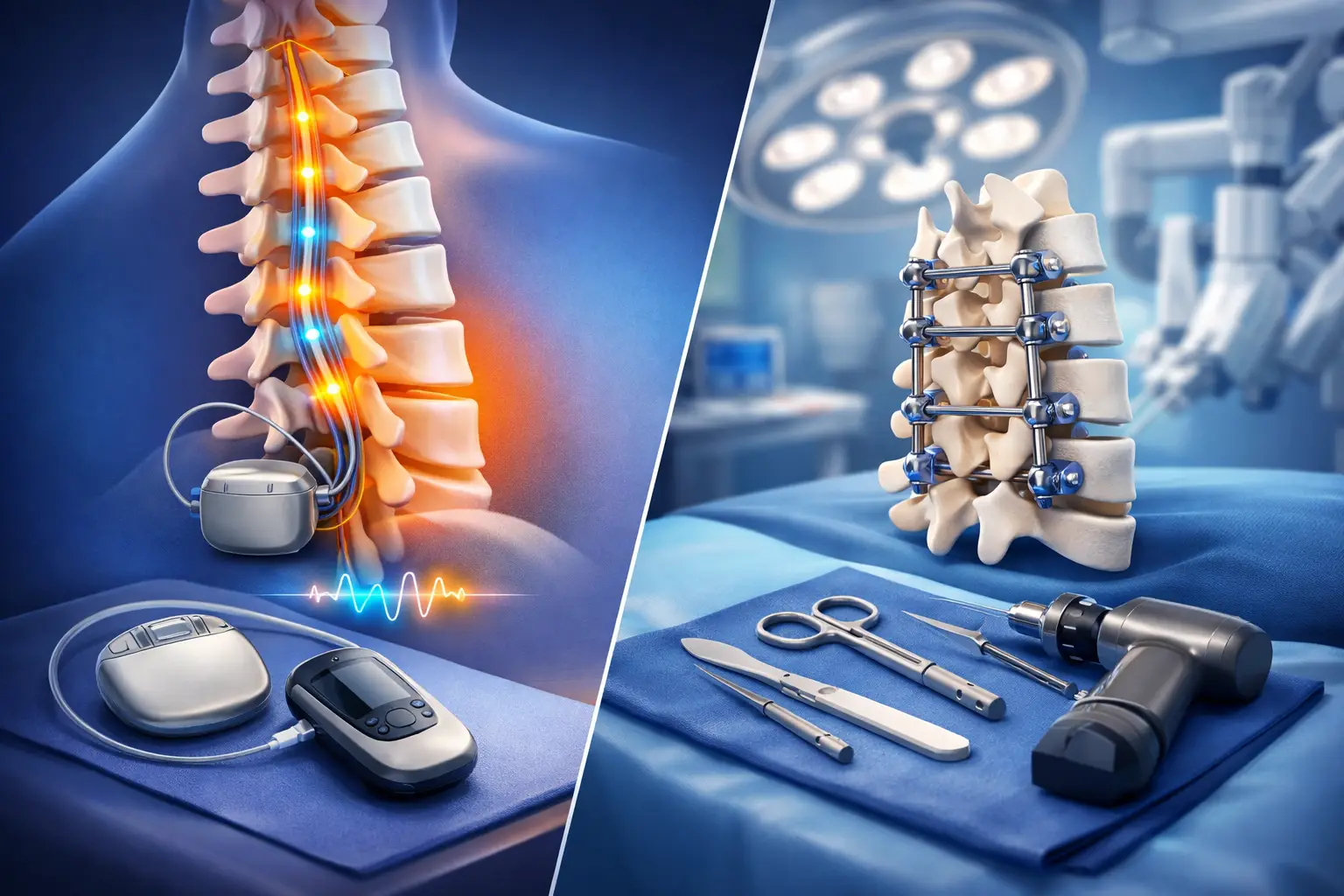
A recommendation for spine surgery can feel like a turning point, especially when pain has already taken time away from work, sleep, mobility, and the activities that make life feel normal. When considering spinal cord stimulation vs surgery, the right choice is not simply the least invasive option or the fastest path to relief. It depends on what is causing the pain, whether there is a structural problem that needs correction, and what treatment is most likely to restore safe, lasting function.
For some patients, surgery is medically necessary and can be highly effective. For others, particularly those with persistent nerve pain after prior surgery or pain without a correctable spinal issue, spinal cord stimulation may offer a less invasive path forward. A careful, physician-led evaluation helps separate those situations.
Spinal Cord Stimulation vs Surgery: The Core Difference
Spine surgery is designed to address anatomy. Depending on the diagnosis, a surgeon may remove pressure from a nerve, repair instability, correct a deformity, or stabilize part of the spine. Procedures such as decompression, discectomy, laminectomy, and fusion may be appropriate when imaging and symptoms point to a structural source of pain.
Spinal cord stimulation, often called SCS, does not repair a disc, fuse vertebrae, or remove a bone spur. It is a neuromodulation treatment that uses a small implanted device to deliver carefully programmed electrical signals near the spinal cord. Those signals can change how pain messages are processed before they reach the brain. The goal is to reduce chronic pain and help patients move, sleep, work, and participate more fully in daily life.
That distinction matters. SCS is not a replacement for surgery when a patient has significant nerve compression, progressive weakness, spinal instability, or another condition that requires surgical correction. At the same time, surgery is not automatically the best answer for every patient with chronic back or leg pain.
When Spine Surgery May Be the Better Choice
Surgery may be the preferred option when a structural problem clearly matches a patient’s symptoms and examination findings. For example, severe spinal stenosis causing nerve compression, a herniated disc producing progressive weakness, or spinal instability that threatens function may require surgical treatment.
Certain symptoms warrant prompt surgical evaluation. These include new or worsening muscle weakness, loss of bowel or bladder control, numbness in the groin area, major trauma, infection concerns, or signs of spinal cord compression. Pain management procedures should never delay care for an urgent neurologic condition.
When surgery is appropriate, the potential benefit can be substantial. Relieving pressure on a nerve may improve radiating leg pain, numbness, weakness, and walking tolerance. Still, every procedure has trade-offs. Recovery can take weeks to months, and outcomes depend on the diagnosis, the specific procedure, overall health, smoking status, bone quality, and the duration of symptoms before treatment.
Surgery can also introduce risks such as infection, bleeding, blood clots, scar tissue, adjacent segment stress after fusion, or persistent pain despite technically successful treatment. These possibilities do not mean surgery should be avoided when it is needed. They underscore why the decision should be based on a precise diagnosis rather than pain severity alone.
When Spinal Cord Stimulation May Be Considered
Spinal cord stimulation is most often considered for chronic neuropathic pain, meaning pain related to nerve irritation or injury. It may be an option for patients with persistent back and leg pain after spine surgery, often described as failed back surgery syndrome or persistent spinal pain syndrome. It may also help selected patients with chronic radicular pain, complex regional pain syndrome, painful diabetic neuropathy, or other treatment-resistant nerve pain conditions.
A common SCS candidate has already tried appropriate conservative care, which may include physical therapy, medications, targeted injections, or other interventional treatments, without enough durable relief. Just as important, imaging and clinical findings should not reveal a surgical problem that remains unaddressed.
The process usually begins with a temporary trial. Under image guidance, thin leads are placed in the epidural space and connected to an external device. During the trial, the patient can evaluate whether the therapy meaningfully reduces pain and improves daily function. A successful trial is not judged only by a pain score. Better sleep, greater walking tolerance, reduced medication reliance, and an ability to return to valued activities can all be meaningful measures of progress.
If the trial is successful, a permanent system may be implanted. Modern devices can be tailored to the individual’s pain pattern and may use different stimulation programs. The implant procedure is less extensive than many spine surgeries, but it is still a surgical procedure with risks that deserve a clear discussion.
Comparing Recovery, Risks, and Expectations
Recovery is often one reason patients ask about spinal cord stimulation. An SCS trial typically has a short recovery period, while permanent implantation generally involves temporary activity restrictions as the leads and generator pocket heal. Many patients return to light daily activities sooner than they would after a fusion or major decompression, though timing varies.
Spine surgery has a broader range of recovery experiences. A minimally invasive discectomy may allow a relatively quick return to routine activity, while a multilevel fusion may require a longer, more structured recovery. Comparing recovery time without comparing the underlying diagnosis can be misleading. A surgery that corrects a serious mechanical issue cannot be judged by the same standard as a treatment intended to modulate chronic nerve pain.
SCS also has specific limitations. It may not eliminate pain completely, and effectiveness can change over time. Some patients need reprogramming, revision, or device replacement in the future. Potential complications include infection, lead movement, discomfort at the implant site, hardware concerns, and the need for additional procedures. Not every type of pain responds well to stimulation, particularly pain driven primarily by mechanical instability or inflammation rather than nerve signaling.
The most realistic goal in either pathway is meaningful improvement, not a promise of a perfect, pain-free outcome. For many patients, success means being able to stand longer, travel more comfortably, play with grandchildren, return to work, or sleep through the night without escalating opioid use.
The Questions That Should Guide the Decision
The central question is not, “Which treatment is better?” It is, “What is causing my pain, and which treatment addresses that cause?” A high-quality evaluation combines a detailed history, physical examination, imaging review, prior treatment response, and an understanding of how pain affects everyday life.
Patients should also consider whether their symptoms are stable or progressing. New weakness or worsening neurologic symptoms may shift the discussion toward surgical evaluation. If prior surgery relieved the structural problem but nerve pain continues, SCS may become more relevant. If surgery has been recommended, it is reasonable to ask what specific finding the procedure is intended to correct, what improvement is expected, and what may happen without surgery.
Emotional well-being and practical readiness matter, too. Chronic pain affects mood, concentration, relationships, and confidence in movement. SCS candidates commonly undergo psychological screening, not because pain is “all in the mind,” but because successful long-term treatment requires realistic expectations, active participation, and a plan that supports the whole person.
A Personalized Path Beyond One-Size-Fits-All Care
At Global Pain Solutions, treatment planning begins with the recognition that chronic pain is rarely solved by a single generic recommendation. Dr. Nikesh Seth evaluates the source and pattern of pain, reviews prior care, and considers minimally invasive options when they are clinically appropriate. That may include targeted interventions before considering spinal cord stimulation, or collaboration with a spine surgeon when surgery is the safer, more effective next step.
There is no benefit in delaying necessary surgery, and there is no benefit in undergoing an invasive operation that is unlikely to address the true source of pain. A thoughtful second opinion can provide clarity when the path forward feels uncertain.
The most useful next step is a conversation centered on your function: what pain prevents you from doing now, what has already been tried, and what outcome would make treatment worthwhile. With the right diagnosis and an individualized plan, the decision can become less about choosing between two procedures and more about moving toward a life with greater comfort, confidence, and independence.