
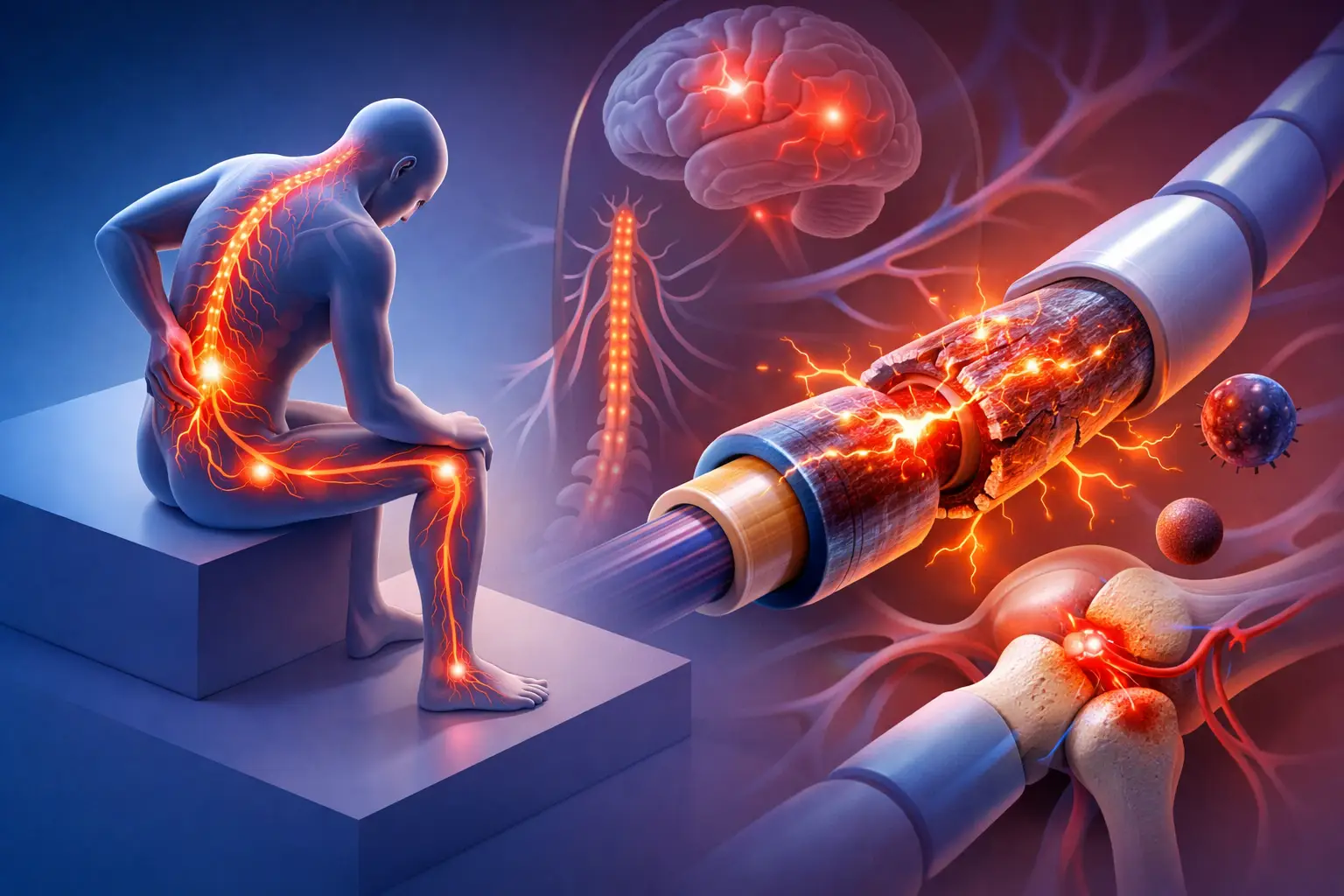
A burning foot that makes sleep difficult. Electric shocks down one leg when you stand. A light touch from clothing that feels unexpectedly painful. These experiences can leave people asking, what causes chronic nerve pain, especially when symptoms continue long after an injury appears to have healed. The answer is often more complex than a single damaged nerve. Persistent nerve pain can involve the nerve itself, the spine, inflammation, circulation, metabolic health, and the way the nervous system has adapted over time.
Nerve pain, also called neuropathic pain, differs from the aching or soreness that commonly follows a strained muscle or arthritic joint. It may feel burning, stabbing, tingling, numb, prickling, or like an electrical current. Symptoms can be constant or intermittent, and they may interfere with walking, work, sleep, balance, and independence. Identifying the source matters because treatments designed for ordinary tissue pain do not always address nerve-driven pain effectively.
What Causes Chronic Nerve Pain?
Chronic nerve pain develops when nerves that carry signals between the body and brain become injured, irritated, compressed, or dysfunctional. In some cases, the initial cause is clear, such as a herniated disc or surgery. In others, symptoms build gradually and require a more careful evaluation to identify contributing factors.
A nerve can send pain signals because it is physically compressed, inflamed, poorly supplied with blood, or damaged by disease. Over time, the spinal cord and brain may also become more sensitive to those signals. This is why pain can persist after an original injury has improved, and why the severity of symptoms does not always match what appears on an imaging study.
Spine conditions and nerve compression
The spine is a common source of nerve-related pain. Discs, joints, ligaments, and bone can narrow the space where spinal nerves travel. A disc herniation, spinal stenosis, degenerative disc changes, arthritis in the facet joints, or scar tissue after surgery may place pressure on a nerve root.
When this occurs in the lower back, pain may travel into the buttock, leg, calf, or foot. Sciatica is a familiar example, though not every pain traveling down the leg is sciatica. In the neck, compressed nerves can cause pain, tingling, numbness, or weakness in the shoulder, arm, or hand.
Compression is not always constant. Certain positions, prolonged sitting, lifting, walking, or extension of the spine may increase irritation. A precise examination helps distinguish a spinal nerve problem from pain originating in the hip, knee, shoulder, peripheral nerves, or blood vessels.
Diabetes and metabolic nerve damage
Diabetes is one of the most frequent causes of peripheral neuropathy. Elevated blood sugar over time can damage the small blood vessels that nourish nerves and disrupt normal nerve function. Symptoms often begin in the feet and may gradually move upward. People may notice numbness, burning, reduced ability to sense temperature, or sharp pain that is worse at night.
Prediabetes, nutritional deficiencies, thyroid disorders, kidney disease, and heavy alcohol use can also contribute to neuropathy. For this reason, a nerve pain evaluation may include a review of medical history, medications, laboratory work, and lifestyle factors. Managing an underlying medical condition can be an essential part of preventing symptoms from progressing, even when additional pain treatment is needed.
Injury, surgery, and repetitive strain
Trauma can directly damage a nerve or cause swelling and tissue changes around it. Motor vehicle collisions, falls, fractures, sports injuries, and work-related strain can all lead to nerve irritation. Sometimes the nerve is stretched or bruised rather than completely severed, yet symptoms can remain significant.
Surgery can also affect nerves. Post-surgical nerve pain may arise from normal healing, scar tissue near a nerve, altered movement patterns, or an underlying pain condition that was not fully resolved by the procedure. This does not mean a surgery was necessarily unsuccessful. It means the pain source deserves a careful reassessment rather than an assumption that more surgery is the only option.
Entrapment neuropathies are another form of repetitive nerve injury. Carpal tunnel syndrome, for example, occurs when the median nerve is compressed at the wrist. Similar problems can affect the ulnar nerve near the elbow or nerves around the hip, knee, and ankle.
Shingles, infections, and immune-related inflammation
The virus that causes chickenpox can reactivate later in life as shingles. Even after the rash resolves, some people develop postherpetic neuralgia, a condition marked by lasting burning, sensitivity, or stabbing pain in the affected area. The risk rises with age, but it can occur in younger adults as well.
Autoimmune conditions and inflammatory disorders can also affect nerves. Inflammation may attack nerves directly or create swelling in surrounding tissues that leads to compression. In these situations, treating pain without addressing the inflammatory driver may offer only partial relief.
Cancer treatment and medication effects
Certain chemotherapy medications can cause peripheral neuropathy, often in the hands and feet. Symptoms may include numbness, tingling, burning, sensitivity to cold, or balance changes. Some medications and toxins can also contribute to nerve dysfunction, particularly when other risk factors are present.
The goal is not simply to tolerate these symptoms. A physician can help determine whether the pattern is consistent with treatment-related neuropathy, whether another cause may be involved, and how to improve comfort and function while coordinating care with the appropriate specialists.
Why Nerve Pain Can Continue After Healing
Pain is a protective signal, but persistent nerve pain can become a problem of ongoing signaling rather than ongoing injury alone. After a nerve has been irritated for weeks or months, it may become overly reactive. The spinal cord and brain can also amplify incoming signals, making ordinary sensations feel painful.
This process is sometimes called sensitization. It does not mean the pain is imagined or “all in your head.” It means the nervous system has changed in a way that requires a more comprehensive treatment strategy. Sleep disruption, stress, reduced activity, and fear of movement can further intensify symptoms, while restoring safe movement and sleep may help reduce the cycle.
Getting an Accurate Diagnosis Matters
Because several conditions can produce similar symptoms, diagnosis should begin with the details. When did the pain start? Does it travel along a specific path? Is there numbness, weakness, skin color change, swelling, or sensitivity to touch? What movements worsen or relieve it?
A thorough pain evaluation may include a neurological and musculoskeletal exam, a review of prior imaging, and selective diagnostic testing when appropriate. MRI or X-ray findings can be useful, but they should be interpreted alongside symptoms and physical exam results. Many adults have age-related spinal changes on imaging without pain, while others have substantial nerve symptoms with modest-looking findings.
Urgent medical assessment is needed for new bowel or bladder changes, rapidly worsening weakness, loss of coordination, fever with severe back pain, or sudden numbness in the groin area. These symptoms can signal a condition that should not wait for a routine appointment.
Treatment Should Match the Pain Generator
Effective care begins with treating the identified cause when possible. Better blood sugar control, physical therapy, targeted exercise, nutritional support, medication adjustments, or treatment for an inflammatory condition may all have a role. Yet chronic nerve pain often benefits from a layered plan rather than a single intervention.
For pain linked to spinal nerve inflammation or compression, image-guided epidural steroid injections may reduce inflammation around the affected nerve and create an opportunity for improved movement and rehabilitation. Selective nerve blocks can also help clarify the pain source and provide relief in specific cases. Radiofrequency ablation may be considered when pain is driven by certain spinal joints rather than a compressed nerve.
For persistent neuropathic pain that has not responded to conservative care, spinal cord stimulation may be an option for carefully selected patients. This minimally invasive therapy uses gentle electrical signals to change how pain signals are processed. It is not appropriate for every diagnosis, but it can be meaningful for people with chronic leg pain, post-surgical pain, or complex nerve pain when other treatments have provided limited benefit.
Medication can be part of a plan, particularly when it is chosen for nerve pain and monitored thoughtfully. However, long-term opioid therapy often has limited effectiveness for neuropathic pain and can introduce significant risks. An individualized approach focuses on function, relief, and the least invasive effective option.
When Persistent Symptoms Deserve Specialist Care
Consider a pain specialist evaluation when nerve symptoms last beyond expected healing, limit daily activities, disrupt sleep, or continue despite initial treatment. This is especially true when pain is accompanied by weakness, falls, reduced mobility, or growing reliance on medication just to get through the day.
At Global Pain Solutions, the focus is on identifying the pain generator and building a plan around each patient’s diagnosis, health history, and goals. For patients in Scottsdale and the greater Phoenix area, this can mean using advanced diagnostics and targeted, minimally invasive options to address pain while protecting mobility and quality of life.
Chronic nerve pain can be persistent, but it is not something you simply have to accept as your new normal. A careful diagnosis and a treatment plan built around the true source of symptoms can create a practical path back to more comfortable movement, better rest, and greater confidence in daily life.