
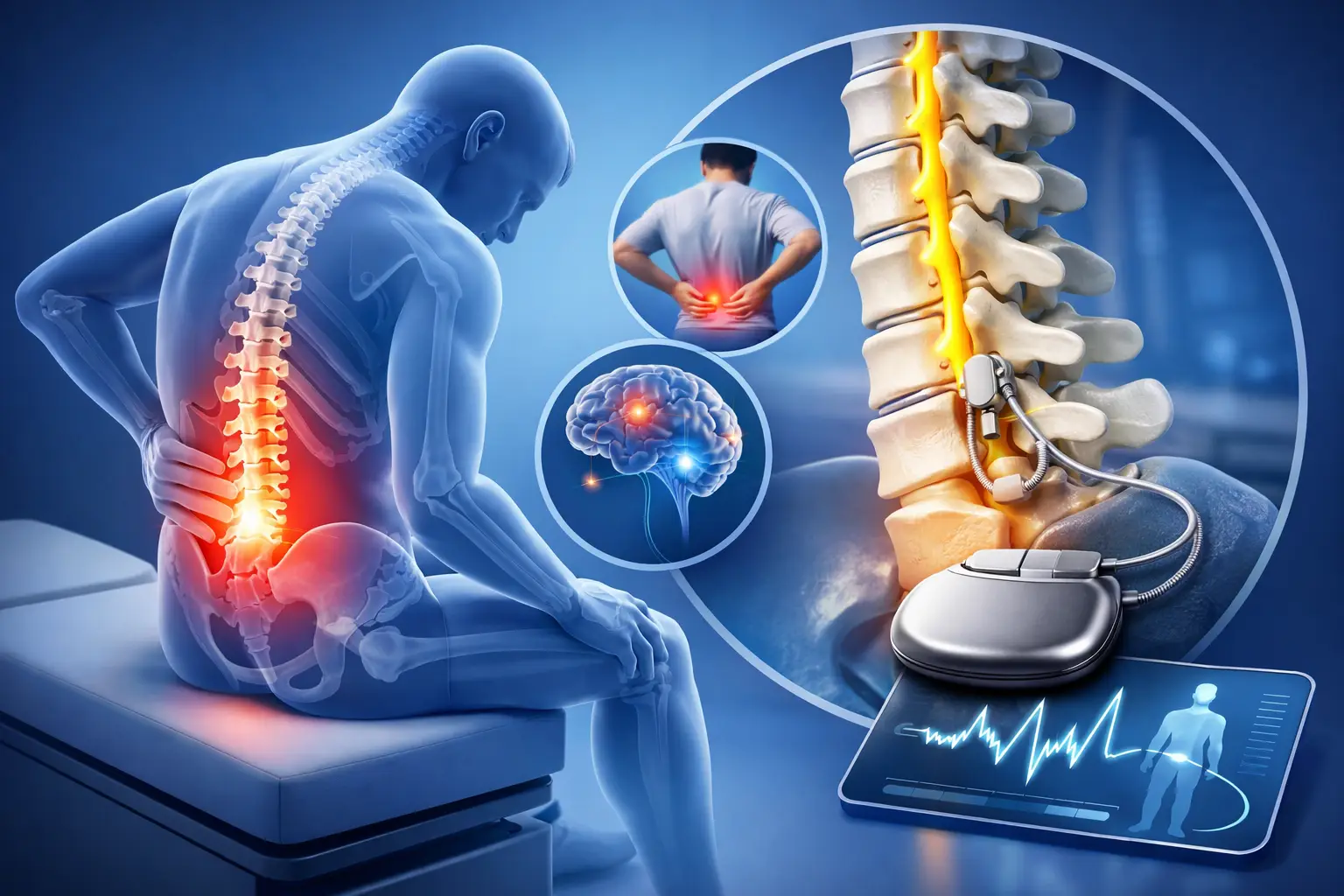
When pain continues after months of medications, physical therapy, injections, or even spine surgery, the question shifts from “What can I try next?” to “What can help me function again?” For people asking who needs spinal cord stimulation, the answer is not simply anyone with back pain. This advanced therapy is designed for carefully selected patients whose chronic pain has not responded adequately to more conservative care and is significantly limiting daily life.
Spinal cord stimulation, often called SCS, is a minimally invasive treatment that uses a small implanted device to send gentle electrical signals near the spinal cord. Those signals can change how pain messages travel to the brain. The goal is not to mask a problem or promise a cure. It is to reduce persistent pain enough that a person can move more comfortably, sleep better, participate in therapy, rely less on medication when appropriate, and return to meaningful activities.
Who Needs Spinal Cord Stimulation?
The strongest candidates usually have chronic, neuropathic pain – pain related to irritated, damaged, or dysfunctional nerves. It may feel burning, electric, shooting, tingling, stabbing, or intensely sensitive to touch. Pain can also be mixed, meaning a person has both nerve-related pain and mechanical pain from joints, discs, muscles, or spinal changes.
Spinal cord stimulation may be considered when pain has lasted for several months or longer, conservative treatments have been reasonably tried, and symptoms continue to interfere with work, mobility, sleep, self-care, or independence. A patient does not need to “run out of options” before discussing SCS. However, the treatment is generally most appropriate after a pain specialist has identified the likely pain generator and determined that less invasive options are unlikely to provide sufficient relief.
Common conditions that may warrant an SCS evaluation include persistent spinal pain after surgery, chronic sciatica or radicular pain, complex regional pain syndrome, and certain cases of painful diabetic neuropathy. Some patients have ongoing leg pain after a lumbar procedure even when follow-up imaging does not show a new surgical problem. Others have severe nerve pain after an injury that remains out of proportion to what standard medications can control.
The diagnosis matters, but function matters just as much. A person who can no longer stand long enough to prepare a meal, walk through a grocery store, concentrate at work, or sleep through the night may benefit from a conversation about advanced pain options.
Persistent Pain After Back or Neck Surgery
One of the most established reasons to consider spinal cord stimulation is persistent pain after spine surgery. This condition may be described as persistent spinal pain syndrome or, less commonly, failed back surgery syndrome. The wording can sound discouraging, but it does not mean that a patient has failed. It means pain remains despite surgery intended to address a spinal condition.
Surgery can successfully stabilize the spine or relieve pressure on a nerve, yet some people continue to experience pain from scar tissue, nerve injury, ongoing nerve sensitization, or changes in the spine above or below the surgical area. Additional surgery is not always the best answer, particularly if imaging does not show a clear structural issue that can be corrected.
For patients with chronic leg pain that persists after lumbar surgery, SCS may offer a less invasive alternative to repeat surgery. It can also be considered for select patients with neck, arm, or upper-body nerve pain after cervical procedures. A thorough review of imaging, surgical history, current symptoms, and neurologic findings is essential before moving forward.
Nerve Pain From Complex Regional Pain Syndrome
Complex regional pain syndrome, or CRPS, is another condition for which spinal cord stimulation may be appropriate. CRPS often develops after an injury, fracture, surgery, or other trauma to an arm or leg. Pain may be severe and accompanied by swelling, skin color or temperature changes, sensitivity to touch, stiffness, or weakness.
Early, coordinated treatment is important with CRPS. Physical therapy, medication, sympathetic blocks, and other interventions may all have a role. If pain remains severe and prevents progress with rehabilitation, spinal cord stimulation can sometimes help reduce pain enough for a person to use the affected limb more effectively and participate more fully in recovery.
Painful Diabetic Neuropathy and Other Neuropathic Conditions
Painful diabetic neuropathy can cause burning, numbness, pins-and-needles sensations, or sharp pain in the feet and lower legs. For some people, symptoms become most disruptive at night, affecting sleep and overall health. Medication may help, but benefits can be incomplete and side effects may limit dosing.
Certain patients with painful diabetic neuropathy may be candidates for SCS after a careful medical evaluation. Blood sugar management remains foundational, and stimulation does not replace diabetes care. Still, for people with persistent pain despite appropriate conservative treatment, it may be a meaningful component of a broader plan.
Not every form of neuropathy should be treated with a stimulator. The cause, distribution, severity, and progression of symptoms need to be assessed. New weakness, bowel or bladder changes, rapidly worsening numbness, or other neurologic warning signs require prompt diagnostic attention rather than an implant discussion alone.
When Spinal Cord Stimulation May Not Be the Right Fit
An SCS system is not a first-line solution for every painful condition. It is usually less useful for pain that is purely mechanical, such as pain caused only by an unstable joint or a correctable spinal compression. If a new MRI shows significant nerve compression that requires surgery, addressing that problem may come first.
The treatment may also be deferred when an active infection is present, a patient cannot safely undergo the procedure, or a medical condition is not well controlled. Significant bleeding risks must be reviewed carefully because the leads are placed near the spine. Patients who have an implanted cardiac device may still be eligible in some circumstances, but coordination with the relevant specialists is needed.
Emotional health is part of the assessment, not a judgment of whether pain is real. Chronic pain affects mood, sleep, relationships, and stress levels, while anxiety, depression, untreated substance use disorder, or unrealistic expectations can influence treatment outcomes. A psychological evaluation is commonly included before implantation to identify support needs and confirm that the patient understands the therapy.
The Trial Is the Most Important Step
A major advantage of spinal cord stimulation is that patients can try it before committing to a permanent implant. During the trial, temporary leads are placed through a needle under imaging guidance and connected to an external device. The patient goes home and tests the system during normal activities over several days.
The trial is about more than a pain score. Meaningful improvement may look like walking farther, standing longer, sleeping with fewer interruptions, using less rescue medication, or returning to an activity pain had taken away. Many specialists look for substantial pain relief, often around 50 percent, along with a clear functional benefit before recommending permanent implantation.
A trial can also show when SCS is not the right approach. That is valuable information. If stimulation does not improve the symptoms that matter most to the patient, the care plan can be redirected without proceeding to a permanent device.
What to Expect From a Personalized Evaluation
A responsible SCS evaluation begins with a detailed history, physical examination, and review of previous treatment. Imaging may be needed to rule out issues that demand a different approach. The pain pattern is mapped carefully: where it starts, where it travels, what aggravates it, and whether it has nerve-related features.
At Global Pain Solutions, treatment planning is centered on the patient’s diagnosis, goals, and ability to function – not on placing a device simply because pain has lasted a long time. Some patients may be better served by targeted injections, radiofrequency ablation, medication adjustments, rehabilitation, or another minimally invasive treatment. Others may benefit from a spinal cord stimulation trial as part of a plan to reduce chronic pain and avoid unnecessary repeat surgery or long-term opioid dependence.
Permanent implantation, when appropriate, is still a procedure with real considerations. Potential risks include infection, bleeding, lead movement, discomfort at the battery site, and the possibility that pain relief changes over time. Modern systems can often be adjusted as symptoms evolve, but follow-up remains an essential part of care.
For the right patient, spinal cord stimulation is not about chasing a perfect pain-free day. It is about creating enough relief to reclaim the routines, movement, rest, and independence that chronic pain has made difficult – and that conversation is worth having before pain narrows life any further.