
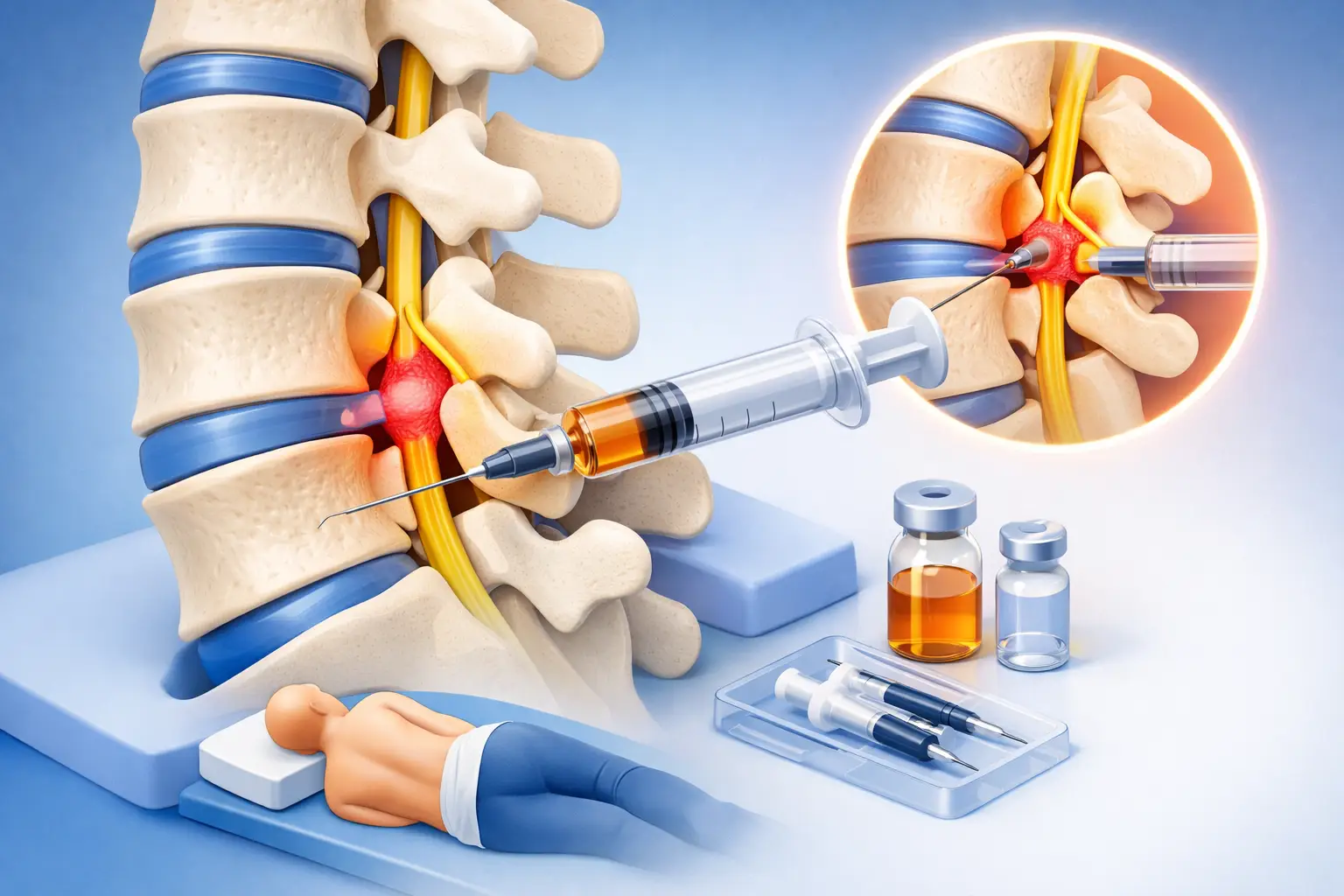
A flare of sciatic pain can turn ordinary movements into careful calculations. Sitting through a meeting, driving across town, sleeping comfortably, or bending to pick up a bag may all become difficult when an irritated spinal nerve is involved. This guide to epidural steroid injections explains how this targeted treatment may fit into a personalized plan for back, neck, arm, or leg pain.
An epidural steroid injection is not a cure for every type of spine pain, and it is not a substitute for a thorough diagnosis. For appropriately selected patients, however, it can reduce inflammation around irritated nerves, create a window for rehabilitation, and help restore meaningful daily function without long-term reliance on opioid medication or immediate surgery.
What Is an Epidural Steroid Injection?
The epidural space is an area surrounding the protective covering of the spinal cord and nerve roots. During an epidural steroid injection, a pain management physician places anti-inflammatory medication, often combined with a local anesthetic, into this space near the suspected source of nerve irritation.
The steroid is intended to calm inflammation. The anesthetic may provide short-term relief and can also offer useful diagnostic information. If numbing medicine temporarily improves a patient’s familiar pain pattern, it supports the possibility that the targeted nerve region is contributing to symptoms.
These injections can be performed in the cervical spine for neck pain that travels into the shoulder or arm, the thoracic spine in more select circumstances, or the lumbar spine for low-back pain and symptoms extending into the buttock, thigh, calf, or foot. The precise location matters. Pain that shoots down one leg, for example, may require a different approach than broad low-back pain without nerve symptoms.
When Epidural Steroid Injections May Help
Epidural injections are most often considered when pain is related to inflammation or compression of a spinal nerve. Common examples include a herniated or bulging disc, spinal stenosis, degenerative disc changes, bone spurs, and recurrent nerve pain after spine surgery. Radiculopathy, often called sciatica in the lower back, is a frequent reason for treatment.
Symptoms that may point toward nerve involvement include burning pain, tingling, numbness, electric-shock sensations, or pain that follows a path into an arm or leg. Weakness can also occur, although new or worsening weakness deserves timely medical evaluation rather than simply waiting for an injection.
Not every back or neck problem responds to an epidural injection. Pain caused mainly by a muscle strain, certain arthritic facet joints, hip disease, sacroiliac dysfunction, or another non-nerve condition may call for a different treatment. That is why a detailed history, physical examination, and review of imaging when appropriate are essential. The goal is to treat the pain generator, not simply place an injection where it seems generally reasonable.
Types of Epidural Steroid Injections
A physician may recommend one of several approaches based on the location of the problem, anatomy, prior surgery, imaging findings, and symptom pattern. The three common approaches are interlaminar, transforaminal, and caudal epidural injections.
An interlaminar injection delivers medication through the back of the spine, allowing it to spread across a broader area of the epidural space. It may be useful when inflammation involves more than one level or a wider distribution.
A transforaminal injection is more selective. Medication is placed near the opening where a specific nerve exits the spine. This approach can be particularly useful when one irritated nerve root is clearly associated with pain traveling down an arm or leg.
A caudal injection enters through the lower end of the spinal canal near the tailbone. It may be considered for lower-back and leg symptoms, especially when access at higher levels is less favorable.
There is no universally “best” technique. The best choice is the one that matches the patient’s anatomy and clinical findings while allowing medication to be delivered as precisely and safely as possible.
What Happens During the Procedure?
For most patients, an epidural steroid injection is an outpatient procedure. Before treatment, the care team reviews medications, allergies, current symptoms, medical conditions, and relevant imaging. Blood thinners, diabetes medications, and active infections require special discussion because they may affect timing or safety.
Patients are positioned comfortably on an exam table. The skin is cleaned, numbed with local anesthetic, and the procedure area is kept sterile. Using fluoroscopy, a form of real-time X-ray guidance, the physician directs a thin needle toward the planned epidural location. Contrast dye is commonly used to confirm appropriate medication spread before the steroid is injected.
Image guidance is a meaningful part of precision care. It helps the physician verify needle placement rather than relying only on surface landmarks. The injection itself often takes only minutes, although the full visit includes preparation, monitoring, and recovery instructions.
Some patients receive medication to help them relax, while others remain awake with local anesthetic alone. The right approach depends on medical history, anxiety level, procedural needs, and the physician’s recommendation. Most people arrange for someone else to drive them home, particularly if sedation is used.
What Relief Can You Expect?
Results vary. Some people notice relief from the anesthetic on the day of treatment, but that early effect can fade as the numbing medicine wears off. The steroid generally takes several days to begin working, and in some cases, improvement develops gradually over one to two weeks.
Pain relief may last weeks or months, and some patients experience enough reduction in symptoms to participate more effectively in physical therapy, walking, stretching, strengthening, and other recovery-focused care. Others receive partial or short-lived benefit. A limited response does not automatically mean treatment failed. It can provide information that helps refine the diagnosis and next step.
An injection is usually most valuable when it supports a broader plan. If pain becomes manageable enough to improve posture, rebuild strength, sleep better, or return to work, those gains may matter as much as the pain score itself. Repeated injections are not automatically appropriate, and the number and timing should reflect the patient’s response, overall health, and treatment goals.
Benefits, Risks, and When to Call Your Doctor
Potential benefits include reduced radiating pain, improved mobility, less need for certain pain medications, and a possible delay or avoidance of surgery for selected patients. Still, epidural steroid injections involve real medical decisions, not a one-size-fits-all solution.
Temporary soreness at the injection site, headache, facial flushing, sleep disruption, or a brief rise in pain can occur. Steroids can raise blood sugar, which is particularly relevant for people with diabetes. Less common but more serious risks include bleeding, infection, nerve injury, allergic reaction, and complications related to inadvertent needle placement. Your physician should explain the risks that are most relevant to your health and the approach being considered.
Seek prompt medical guidance for fever, severe or worsening headache, new bowel or bladder changes, progressive weakness, increasing numbness, or severe pain that feels different from your usual symptoms. These symptoms are uncommon, but they should not be ignored.
Preparing for a Safer, More Useful Visit
Bring an accurate list of medications and supplements, including anticoagulants, antiplatelet drugs, insulin, and diabetes medications. Do not stop prescribed blood thinners on your own. Your pain physician and the clinician who prescribes that medication can determine whether any adjustment is appropriate.
It also helps to describe your symptoms with specificity: where the pain begins, where it travels, what positions worsen it, whether numbness or weakness is present, and how it affects sleep, work, or walking. This information can be as valuable as an imaging report when deciding whether an epidural injection is likely to help.
After the procedure, follow discharge instructions closely. Plan for a lighter day, monitor your symptoms, and ask when to resume exercise, therapy, and regular activities. Keeping a simple record of pain levels, function, and medication use over the next couple of weeks can help guide follow-up decisions.
For patients in Scottsdale and the greater Phoenix area, Global Pain Solutions approaches epidural steroid injections as one option within an individualized, physician-led plan. The right next step begins with understanding why the nerve is irritated and what improvement would make the greatest difference in your everyday life.