
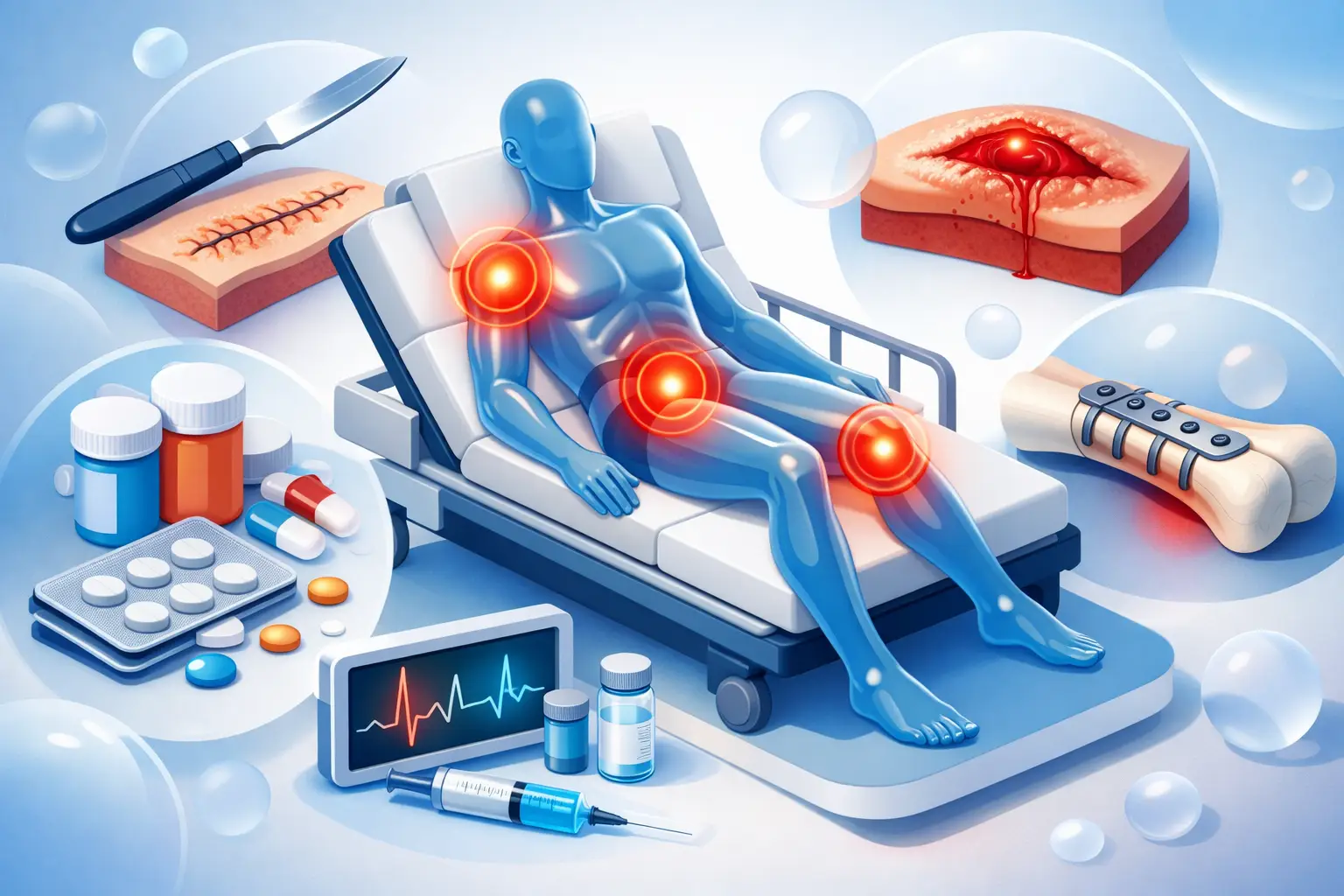
A surgical incision may be small, but the work beneath it can involve skin, muscle, bone, joints, nerves, and surrounding soft tissue. That is why the answer to what causes pain after surgery is rarely as simple as “the incision is healing.” Some discomfort is an expected part of recovery. Pain that persists, worsens, or changes character deserves a closer look.
The goal is not simply to suppress pain long enough to get through the day. It is to understand what is driving the symptoms, protect recovery, and help restore comfortable movement, sleep, work, and independence.
What causes pain after surgery during normal healing?
Surgery intentionally creates tissue trauma so a damaged area can be repaired, removed, stabilized, or reconstructed. In the days and weeks after a procedure, the body responds with inflammation. Blood flow increases, immune cells move into the area, and tissues begin rebuilding. This process can cause soreness, swelling, bruising, stiffness, tenderness, and pulling around the incision.
Pain can also come from the way the body had to be positioned during surgery. A patient may notice neck, shoulder, low back, hip, or muscle pain that is separate from the surgical site itself. Limited movement after surgery can compound the problem. Muscles weaken quickly when they are not used, and guarded movement can make joints and soft tissues feel stiff and painful.
The expected recovery timeline depends on the procedure, the tissue involved, and the individual. A minor soft-tissue procedure may improve steadily over days, while orthopedic, spine, abdominal, or reconstructive surgery can require a longer recovery. Improvement does not always happen in a perfectly straight line. Activity, physical therapy, sleep, and swelling can all cause temporary flares.
What matters most is the overall pattern. Expected postoperative pain should generally become more manageable over time, even if the progress is gradual.
When pain points to a problem beyond routine recovery
Persistent pain does not automatically mean that a surgery failed. However, it can indicate that a specific pain generator has not been identified or that a complication needs medical attention. A careful evaluation considers the location of pain, whether it travels, what movements trigger it, how it affects function, and whether there are neurologic or systemic symptoms.
Nerve irritation or nerve injury
Nerves can be stretched, compressed, inflamed, or injured during surgery. In some cases, scar tissue that develops during healing may irritate a nearby nerve. Nerve-related pain often feels different from typical incision soreness. Patients may describe burning, shooting, electric, stabbing, tingling, numbness, or a painful sensitivity to light touch.
For example, pain that travels from the low back into the leg after spine surgery may involve nerve inflammation or compression. Following joint replacement or abdominal surgery, localized burning or hypersensitivity may suggest irritation of smaller sensory nerves. The treatment approach depends on the nerve involved and the underlying cause, which is why accurate diagnosis matters.
Ongoing inflammation, muscle strain, or joint dysfunction
Surgery can correct one problem while leaving another source of pain in place. A patient may have a successful spine procedure yet continue to experience pain from sacroiliac joint dysfunction, facet joints, hip arthritis, muscle spasm, or myofascial trigger points. Similarly, after knee or shoulder surgery, altered movement patterns can overload nearby muscles and joints.
Inflammation can also remain active longer than expected, particularly after more extensive procedures. Swelling, weakness, and limited range of motion may lead patients to compensate in ways that create new pain. This is one reason a root-cause assessment is more useful than assuming every postoperative symptom comes from the surgical site.
Scar tissue and adhesions
Scar tissue is a normal part of healing. Most scars are not painful. However, dense or restrictive scar tissue can limit tissue glide, pull on surrounding structures, or contribute to nerve irritation. In some areas of the body, internal adhesions may also contribute to discomfort or restricted movement.
Pain from scar-related changes can be difficult to distinguish from pain caused by inflammation or a structural issue. The location, timing, physical examination, imaging when appropriate, and response to targeted treatment can help clarify the source.
Infection, blood clot, or other postoperative complications
Certain causes of pain after surgery require prompt medical evaluation. Infection can cause increasing pain, warmth, redness, drainage, fever, chills, or a wound that is not healing as expected. A blood clot may cause new swelling, warmth, tenderness, or pain in an arm or leg. Sudden chest pain, shortness of breath, fainting, or coughing up blood requires emergency care.
New weakness, loss of bowel or bladder control, numbness in the groin area, or severe escalating back or neck pain after a spine procedure also needs urgent assessment. These symptoms are not situations to monitor at home while hoping they improve.
The original condition may still be active
Surgery does not always eliminate every contributor to pain. Degenerative arthritis, disc disease, widespread nerve sensitivity, autoimmune inflammation, or chronic musculoskeletal conditions may continue after a procedure. In some cases, the operated area heals appropriately, but pain persists because the original diagnosis addressed only one part of a more complex condition.
This is particularly relevant when pain was present for months or years before surgery. Long-standing pain can affect muscles, posture, sleep, mood, and the nervous system itself. Successful recovery may require more than structural repair.
Why pain can become chronic after surgery
Pain that lasts beyond the expected tissue-healing period is often called persistent postsurgical pain. It may arise from nerve changes, ongoing inflammation, mechanical problems, or heightened sensitivity within the nervous system. The longer pain signals remain active, the more easily the brain and spinal cord may amplify them. This does not mean the pain is imagined. It means the pain system has become more reactive.
Risk can be higher after surgeries involving nerves, the chest, breast, abdomen, amputation, joints, or the spine. Severe pain before surgery, poorly controlled acute pain after surgery, repeat operations, anxiety, sleep disruption, and certain medical conditions can also influence recovery. Still, risk factors are not destiny. Early, individualized care can often reduce the impact of persistent symptoms.
How specialists evaluate postoperative pain
A meaningful pain evaluation begins with listening to the patient’s experience. The timing of symptoms matters. So does the quality of pain, whether it is localized or radiating, what makes it better or worse, and how it limits walking, lifting, sleep, work, or daily activities.
The physical examination may assess strength, sensation, reflexes, joint motion, muscle tenderness, gait, and signs of nerve involvement. Depending on the situation, diagnostic imaging, electrodiagnostic testing, or targeted injections may help identify the pain source. A diagnostic injection is not simply a treatment. When performed with image guidance, it can also provide valuable information about which structure is contributing to symptoms.
Treatment should match the source of pain
Not every patient with postoperative pain needs another surgery, and long-term opioid treatment is not the only option. The right plan depends on the diagnosis, recovery stage, medical history, and functional goals.
For some patients, treatment may include carefully selected medication management, physical rehabilitation, and strategies to improve sleep and movement tolerance. For others, targeted interventional options may be appropriate, such as epidural steroid injections for nerve-root inflammation, joint injections for a confirmed pain generator, sympathetic blocks for certain nerve-mediated conditions, or radiofrequency ablation for selected chronic joint-related pain.
When pain remains severe and treatment-resistant, advanced options such as spinal cord stimulation may be considered for appropriately screened patients. These therapies are not interchangeable, and they are not appropriate for every type of postoperative pain. The advantage of specialty pain care is the ability to match a minimally invasive treatment plan to the most likely cause rather than relying on generalized medication alone.
At Global Pain Solutions, postoperative pain care is built around this individualized process: identify the source, use precise diagnostics, and pursue treatments that support meaningful function and lasting relief.
When to seek a pain specialist
Consider a specialized evaluation when pain is not improving as expected, interferes with rehabilitation, prevents sleep, limits walking or work, or continues after the surgeon has confirmed that the procedure itself is healing appropriately. Burning, tingling, radiating pain, numbness, or pain that seems out of proportion to the visible healing process are also reasons to ask for further assessment.
You do not have to wait until pain has taken over every part of daily life. A clear diagnosis and a targeted plan can help you move beyond simply enduring recovery and toward rebuilding the activities that make life feel like your own again.