
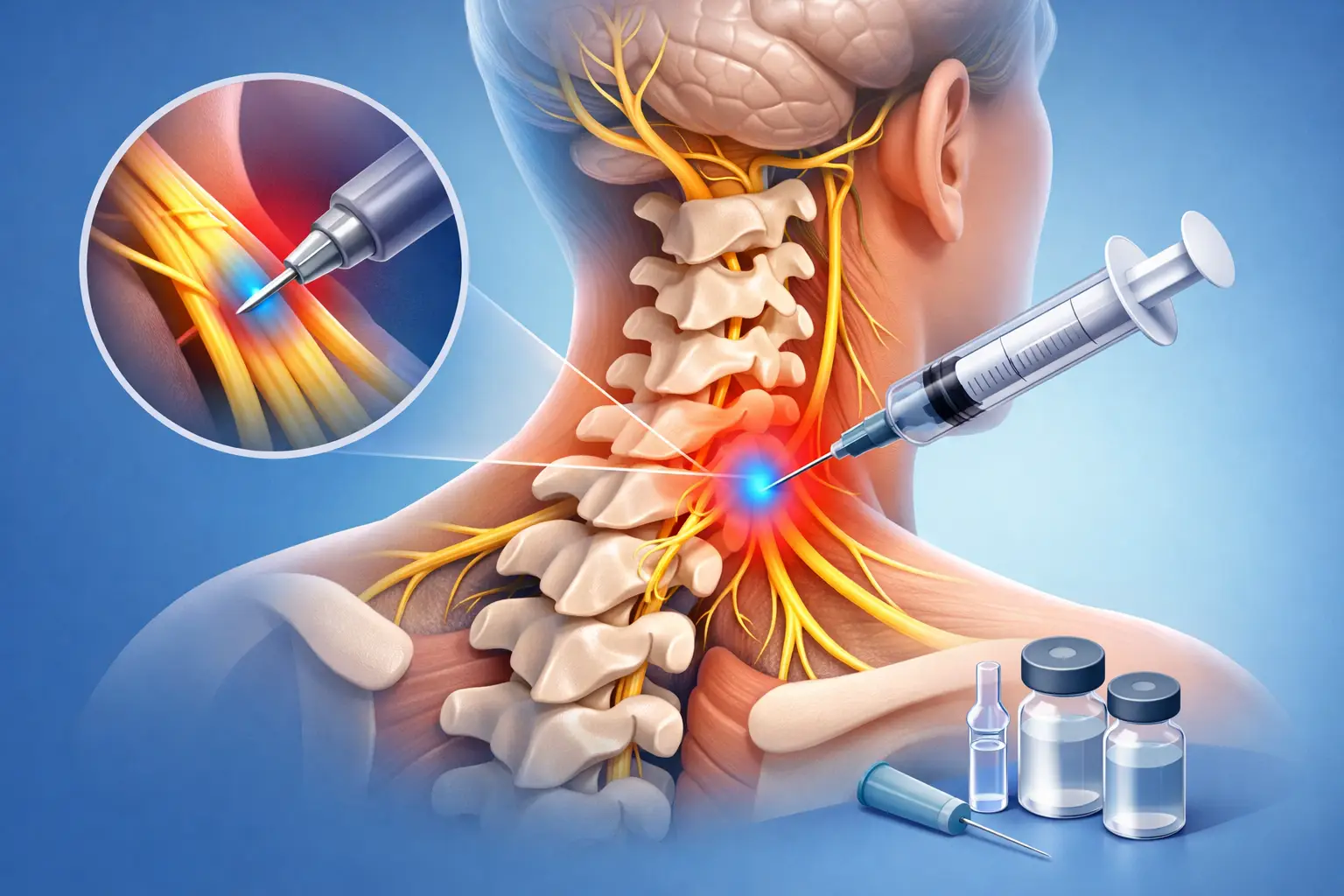
Pain that shoots from the low back into the leg, burns after surgery, or keeps returning from a particular joint often follows a recognizable nerve pathway. Nerve block injections are designed to address that pathway with precision. Rather than relying solely on medications that affect the entire body, a nerve block targets the nerves believed to be carrying pain signals.
For many people living with persistent pain, that distinction matters. A well-planned injection may reduce pain, support better movement, and provide valuable information about the source of symptoms. It is not a one-size-fits-all answer or a substitute for a careful diagnosis. It is one targeted tool that may help a physician build a more effective, individualized treatment plan.
What are nerve block injections?
A nerve block is an image-guided procedure in which a pain management physician places medication near a specific nerve, nerve group, or part of the nervous system involved in pain transmission. Depending on the purpose of the injection, the medication may include a local anesthetic, an anti-inflammatory corticosteroid, or both.
The local anesthetic can temporarily interrupt pain signaling. A steroid, when appropriate, may help calm inflammation around irritated nerves and provide longer relief. The exact medication, dose, and injection site depend on the condition being treated, your medical history, and the physician’s clinical findings.
Some blocks are primarily diagnostic. If numbing a particular nerve substantially reduces the familiar pain for the expected duration of the anesthetic, that response helps confirm that the nerve is contributing to the problem. Other blocks are therapeutic, intended to reduce pain and improve function. In many cases, they serve both purposes.
When a targeted nerve block may be considered
Nerve blocks are not reserved for one diagnosis. They may be considered when pain has a clear pattern, conservative care has not provided enough relief, or a physician needs more information before recommending a longer-lasting procedure.
For example, certain spinal injections may be used for radiating neck or low back pain related to nerve irritation. Occipital nerve blocks can be considered for some headache and migraine patterns. Genicular nerve blocks may help evaluate ongoing knee pain, while sympathetic blocks may be used for conditions involving abnormal sympathetic nerve activity, including select cases of complex regional pain syndrome.
A block may also be appropriate for pain that persists after surgery, nerve-related facial pain, or localized pain following an injury. The key question is not simply where pain is felt. It is whether the symptoms, physical examination, imaging, and prior treatment history point to a nerve target that can be treated safely and meaningfully.
That is why a thorough evaluation comes first. Pain in the same location can have very different causes. Hip pain may originate in the joint, the low back, surrounding muscles, or a nerve. Treating the wrong structure may offer little benefit, even when the procedure itself is performed well.
What happens during the procedure?
Most nerve blocks are outpatient procedures. After reviewing your symptoms, medications, allergies, and relevant imaging, the physician positions you based on the area being treated. The skin is cleaned, and a local anesthetic may be used to numb the injection site.
Fluoroscopy, a type of live X-ray, or ultrasound is commonly used to guide needle placement. Image guidance is a central part of precision pain care because it allows the physician to visualize the target area and avoid relying on surface landmarks alone. In some procedures, contrast dye may be used to confirm that medication will spread in the intended location.
You may feel pressure or brief discomfort as the needle is positioned, but the procedure itself is often completed within minutes. Sedation is not always needed, and whether it is appropriate depends on the procedure and the patient. After a short recovery period, most patients go home the same day and need a responsible adult to drive if sedation was used.
What results can you expect?
Response to a nerve block varies. Some patients experience significant pain reduction within minutes because of the local anesthetic. When a steroid is used, any anti-inflammatory benefit may take several days to develop. It is also possible to have temporary soreness at the injection site or a brief increase in symptoms before improvement occurs.
The duration of relief depends on the diagnosis, the type of block, the medication used, and the degree of underlying nerve or tissue irritation. A diagnostic block may be expected to provide only short-term relief. That short window can still be clinically useful. It may help guide the next step, such as physical therapy, medication adjustments, radiofrequency ablation, or another targeted intervention.
Meaningful improvement is not always defined as complete pain elimination. For someone who has avoided walking, driving, sleeping comfortably, or returning to work because of pain, a reduction that restores those activities can be a major outcome. At Global Pain Solutions, treatment decisions are centered on both symptom relief and the functional gains that matter in daily life.
Benefits and limits of nerve blocks
The primary advantage of a nerve block is specificity. It can deliver medication close to the suspected pain pathway while limiting whole-body exposure compared with oral medications. It is minimally invasive, typically requires little downtime, and may help patients participate more fully in rehabilitation or daily activities.
Diagnostic value is another important benefit. Chronic pain can be complex, particularly when imaging findings do not perfectly match a person’s symptoms. A carefully selected block can help separate a likely pain generator from an incidental finding on an MRI or X-ray.
Still, nerve blocks have limits. They do not reverse every structural change, repair severe arthritis, or guarantee permanent relief. Steroid-containing injections may not be appropriate for everyone, including some patients with uncontrolled diabetes, active infection, certain bleeding risks, or medical circumstances that require special planning. The number and timing of injections should also be individualized rather than repeated automatically.
Understanding safety and possible side effects
When performed by a qualified physician using appropriate imaging and sterile technique, nerve blocks are generally considered low risk. Even so, every procedure carries potential complications. These can include temporary soreness, bruising, bleeding, infection, allergic reaction, temporary numbness or weakness, and medication-related effects.
The specific risks depend on the location of the injection. Your physician should explain what is expected after your procedure, what symptoms warrant a call to the office, and when urgent medical evaluation is needed. New or worsening weakness, fever, severe headache, difficulty breathing, or loss of bowel or bladder control should never be ignored.
Open communication is essential. Tell your care team about blood thinners, diabetes medications, allergies, recent illness, pregnancy, and any prior reaction to an injection. These details help determine whether a procedure should be modified, postponed, or avoided.
How nerve blocks fit into a long-term pain plan
The strongest results often come when a nerve block is part of a larger strategy rather than a stand-alone event. Reduced pain may create an opportunity to rebuild strength, improve mobility, correct movement patterns, or sleep more consistently. Those changes can help extend the practical value of an injection.
For others, a successful diagnostic block may point toward a procedure intended to provide longer relief. If the block does not help, that information is useful too. It signals the need to reassess the diagnosis and avoid pursuing a treatment path that is unlikely to serve you.
Persistent pain can make every decision feel urgent, especially when it affects work, family responsibilities, and independence. A precise evaluation and a targeted plan offer a more productive next step than simply enduring symptoms or escalating medication. The right nerve block is not just about quieting a pain signal – it can help clarify the path back to movement and the parts of life pain has put on hold.