
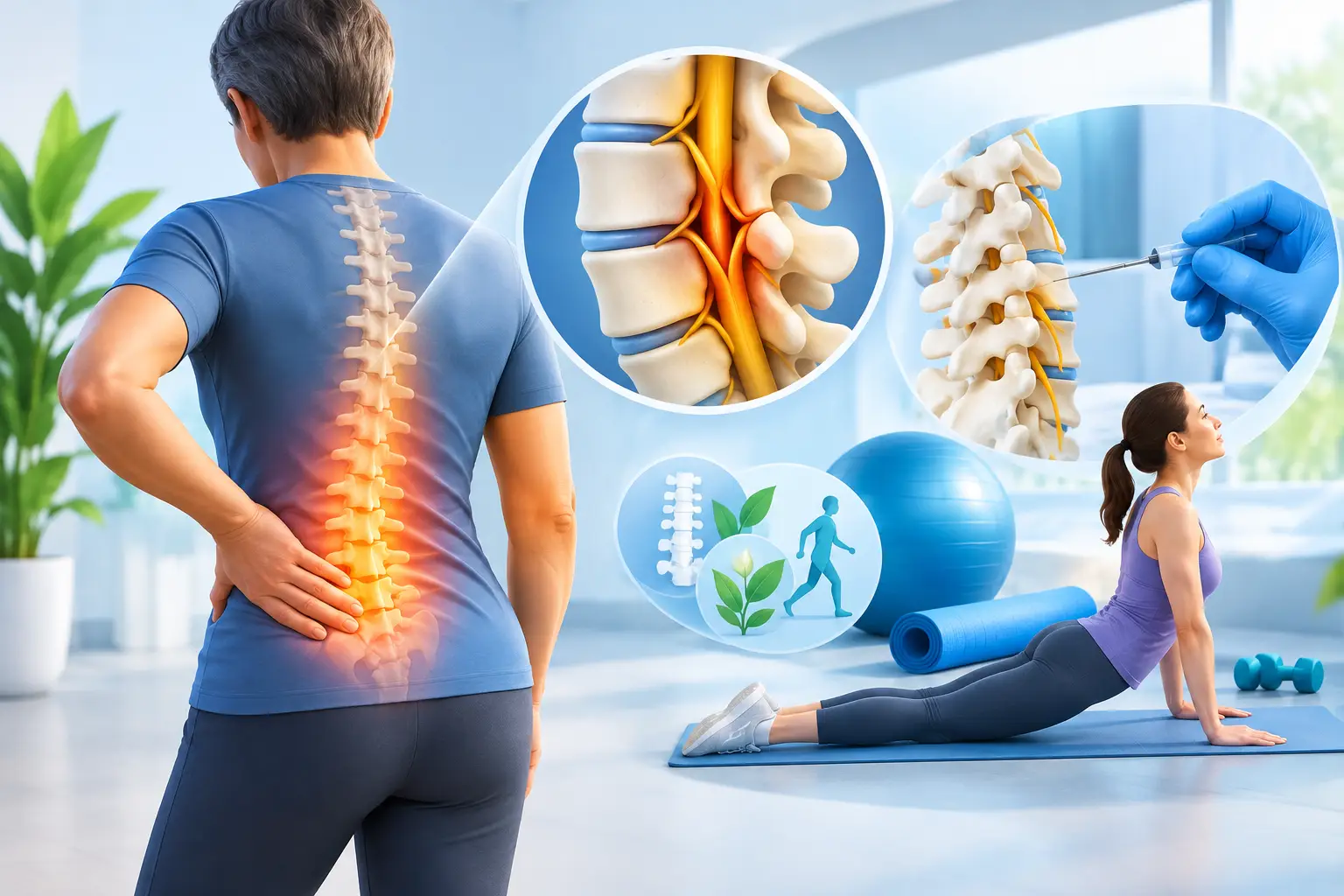
For many people with spinal stenosis, the hardest part is not the back pain itself. It is realizing that a short walk, a trip through the grocery store, or standing at the kitchen counter can trigger burning leg pain, heaviness, numbness, or weakness. Effective spinal stenosis treatments focus on more than quieting symptoms for a few hours. They should help identify what is narrowing the spinal canal, calm irritated nerves, and restore the ability to move through daily life with greater confidence.
Spinal stenosis is a narrowing of the spaces in the spine where nerves travel. It most often affects the lower back, called lumbar stenosis, though it can also occur in the neck, called cervical stenosis. Arthritis, disc changes, thickened ligaments, bone spurs, and age-related wear can all contribute. The right treatment depends on the location and severity of narrowing, the symptoms involved, and how much those symptoms are limiting function.
Why Symptoms Matter as Much as the Scan
An MRI or CT scan can show narrowing, but imaging alone does not determine the best course of care. Some people have significant narrowing on a scan with few symptoms. Others have moderate narrowing that produces severe leg pain or limits walking to only a few minutes. A careful evaluation connects the imaging findings with the patient’s physical exam, symptom pattern, activity goals, and medical history.
Lumbar stenosis commonly causes neurogenic claudication. This means pain, tingling, numbness, cramping, or weakness that develops with standing or walking and improves when sitting or leaning forward. Many patients notice they can walk farther while pushing a shopping cart or cycling than they can while standing upright. Cervical stenosis may cause neck pain, arm symptoms, hand clumsiness, balance problems, or weakness.
Certain symptoms deserve urgent medical attention. New loss of bowel or bladder control, numbness in the groin area, rapidly progressing weakness, major balance changes, or severe symptoms after trauma should be evaluated promptly. These may signal significant nerve compression that should not be managed by waiting to see if it improves.
Spinal Stenosis Treatments Usually Begin Conservatively
For patients without urgent neurologic concerns, the first step is often a focused, non-surgical plan. The goal is not simply to avoid surgery at all costs. It is to choose the least invasive treatment likely to provide meaningful relief while protecting mobility and independence.
Physical therapy can be valuable when it is tailored to stenosis rather than delivered as a generic back-pain program. Flexion-based exercises, core and hip strengthening, conditioning, posture training, and activity modification may reduce strain on the spine and improve walking tolerance. Therapy is especially useful when fear of pain has caused someone to become less active and progressively weaker.
Medication may also have a role, particularly during symptom flares. Anti-inflammatory medicines, nerve-pain medications, or short-term muscle relaxants may be considered based on the patient’s health history and other prescriptions. However, medication is rarely a complete answer for persistent stenosis-related nerve pain. Long-term opioid use can create additional risks without addressing the structural source of nerve irritation, so it should not be the default strategy for chronic symptoms.
Lifestyle adjustments are not a cure, but they can make treatment more effective. Breaking long walks into shorter intervals, using supportive devices when appropriate, maintaining a healthy weight, and choosing low-impact conditioning can help patients stay active while care is underway.
When an Epidural Steroid Injection May Help
If leg pain, sciatica, or inflammation is preventing progress with therapy and daily activity, an epidural steroid injection may be an appropriate next step. This image-guided procedure places anti-inflammatory medication near the irritated spinal nerves. It does not remove the narrowing, but it can reduce inflammation around compressed nerves and create an opportunity for improved movement, rehabilitation, and sleep.
The response varies. Some patients experience substantial relief that lasts for months, while others have more limited or shorter-term benefit. The injection approach also matters. Depending on where the narrowing and symptoms are located, a physician may recommend an interlaminar, transforaminal, or caudal epidural approach. Precision is essential because the goal is to treat the most likely pain generator, not simply inject medication into the general area.
At Global Pain Solutions, treatment planning is based on the patient’s symptoms, imaging, prior treatments, and functional goals. For someone who wants to return to work, walk a golf course, travel, or care for grandchildren, those goals should shape the care plan as much as the pain score does.
When Minimally Invasive Care Is Not Enough
A common concern is whether receiving injections or therapy means delaying needed surgery. The answer depends on the situation. Conservative and interventional care can be very appropriate when symptoms are stable, there is no serious neurologic deficit, and a patient is gaining function. But persistent or progressive weakness, severe walking limitation despite well-directed treatment, or signs of spinal cord compression may warrant a surgical consultation.
Surgical decompression aims to create more room for the affected nerves. Procedures may include laminectomy, laminotomy, or other techniques designed to remove the tissue contributing to compression. In some cases, fusion is considered when instability, deformity, or significant vertebral slippage is also present. Surgery can be highly effective for appropriately selected patients, particularly when leg symptoms and walking limitations are driven by clear nerve compression.
Still, surgery involves trade-offs. Recovery takes time, results can vary based on overall health and the complexity of the spine condition, and fusion may not be necessary for every patient. A thoughtful evaluation helps distinguish people who are likely to benefit from targeted pain procedures and rehabilitation from those who need a surgical opinion sooner.
How to Choose the Right Level of Care
The best care path is rarely a one-size-fits-all sequence. A patient with mild symptoms and good walking capacity may do well with targeted therapy and activity changes. Someone with intense radiating pain who cannot participate in therapy may benefit from an epidural injection to reduce nerve inflammation. A patient with worsening weakness needs a more urgent evaluation.
A comprehensive pain consultation should clarify several practical questions: Which spinal level is causing the symptoms? Is the pain primarily nerve-related, joint-related, muscular, or a combination? What treatments have already been tried, and were they specific enough to be informative? Most importantly, what would meaningful improvement look like in everyday life?
That last question prevents treatment from becoming a cycle of temporary symptom management. Pain relief matters, but so do walking farther, sleeping better, working more comfortably, and participating in the activities that make life feel normal.
A More Purposeful Path Forward
Living with spinal stenosis does not mean accepting a smaller life or rushing into a procedure that may not fit your condition. The most effective plan starts with an accurate diagnosis, uses conservative care when appropriate, and adds precise interventions when symptoms continue to limit function. If pain, numbness, or walking intolerance is changing how you live, a physician-led evaluation can help turn uncertainty into a clear, individualized next step.