
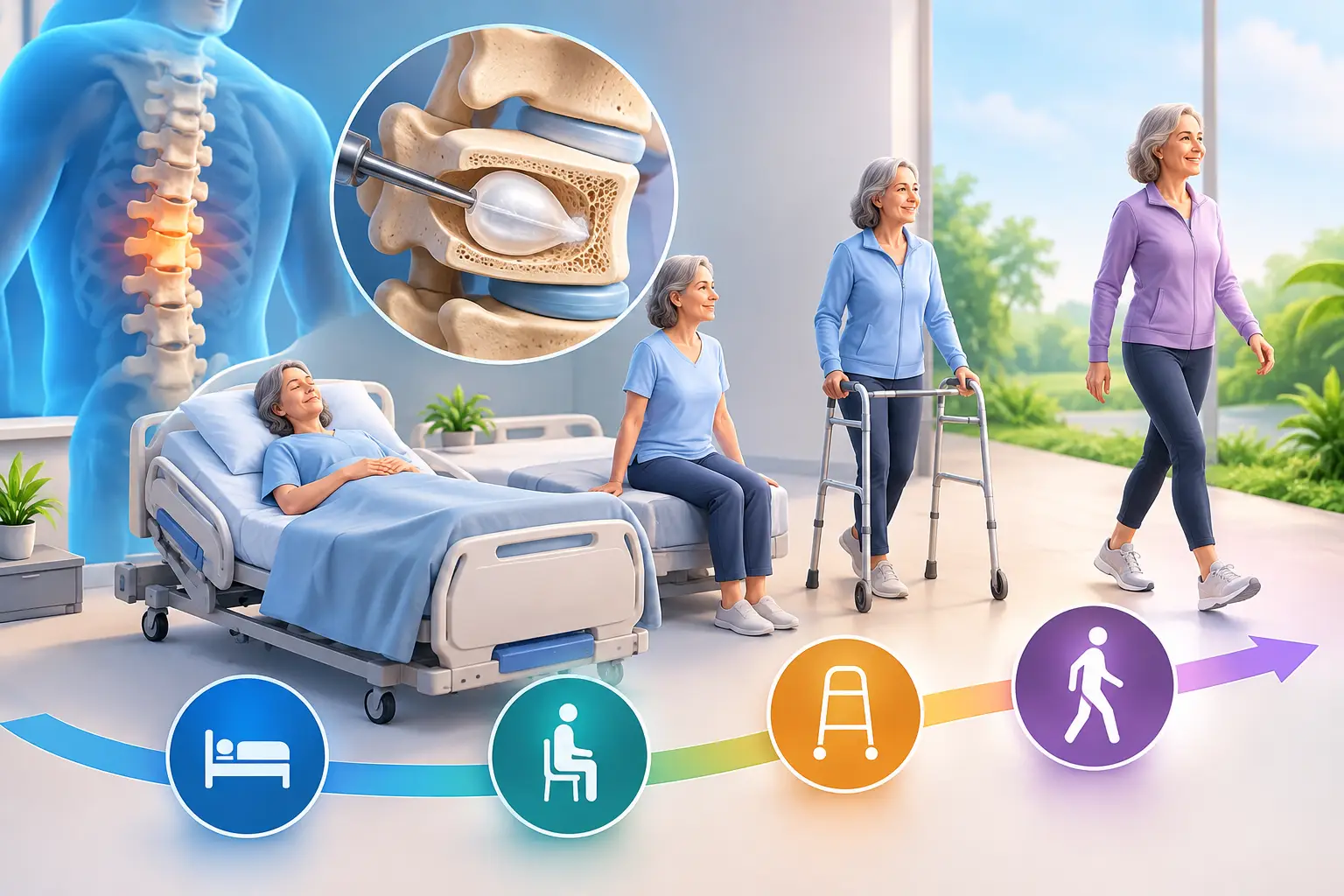
Many people arrive for kyphoplasty after weeks or months of sharp back pain that makes standing, walking, sleeping, or simply getting dressed difficult. A vertebral compression fracture can change daily life quickly, particularly when osteoporosis has weakened the spine. This guide to kyphoplasty recovery timeline explains what typically happens after this minimally invasive procedure, what can influence healing, and when to call your care team.
Kyphoplasty is designed to stabilize a fractured vertebra by creating space within the bone and placing bone cement to support it. For appropriate candidates, pain relief can occur relatively quickly because the fracture is stabilized. Still, the procedure is only one part of recovery. Protecting the treated area, gradually returning to movement, and addressing the cause of the fracture all matter for lasting function.
The first hours after kyphoplasty
Kyphoplasty is commonly performed as an outpatient procedure. Afterward, patients spend time in a recovery area while the clinical team monitors blood pressure, comfort, alertness, and the small incision sites. If sedation was used, grogginess, mild nausea, or temporary unsteadiness can occur. A responsible adult should drive you home and stay available during the first night.
Some patients notice meaningful improvement in fracture-related pain the same day. Others need several days to recognize the full benefit as post-procedure soreness settles. It is normal to have tenderness at the needle-entry sites or stiffness from lying in one position during treatment. That discomfort is usually different from the deep, sharp pain caused by the fracture.
Your physician will provide instructions specific to your medical history, the level treated, and the cause of the fracture. Take prescribed medications exactly as directed, including any guidance about restarting blood thinners. Do not make medication changes on your own.
Days 1 through 3: Rest, walking, and incision care
The first few days should focus on light activity rather than bed rest. Short, frequent walks around the home can support circulation, reduce stiffness, and help you regain confidence with movement. Rest when fatigue increases, but avoid spending the entire day in bed unless your physician has specifically instructed otherwise.
Most people can shower according to their discharge instructions, often within a day or two, but should keep the incision area clean and avoid soaking in a bathtub, pool, or hot tub until cleared. Small bandages may be used initially. Watch for increasing redness, drainage, warmth, or swelling at an incision site.
Avoid bending deeply at the waist, twisting, lifting heavy objects, or attempting housework that strains the back. This is not the time to move furniture, carry laundry baskets, or resume an exercise routine. A stable vertebra needs protection, and your body may still be recovering from the fracture itself even if pain has improved quickly.
Kyphoplasty recovery timeline: the first two weeks
During the first one to two weeks, many patients can gradually resume basic daily activities such as preparing simple meals, walking longer distances, and moving around the home more comfortably. Return to desk work may be possible within several days for some people, while physically demanding jobs often require more time and a more deliberate plan.
Recovery is not identical for every patient. A single recent fracture in an otherwise active person may allow a faster return to routine than multiple fractures, severe osteoporosis, significant spinal arthritis, or another chronic pain condition. Age alone does not determine recovery, but bone strength, overall health, balance, activity demands, and the severity of pain before treatment can all affect the pace.
A follow-up visit gives your pain specialist an opportunity to assess pain relief, mobility, incision healing, and any symptoms that need attention. It is also the right time to discuss whether physical therapy, posture training, or a tailored home exercise plan can help restore strength safely. The goal is not simply to feel less pain. It is to return to walking, working, sleeping, and participating in daily life with greater confidence.
Weeks 3 through 6: Rebuilding safe movement
By this stage, many patients are increasing activity with fewer restrictions, provided they have been cleared by their physician. Gentle walking is often a foundation for recovery. Depending on the clinical plan, rehabilitation may also address hip strength, core stability, balance, and safer body mechanics for reaching and lifting.
This phase is especially valuable for preventing a cycle of pain and inactivity. After a painful compression fracture, it is understandable to move cautiously. Yet prolonged guarding can lead to muscle weakness, reduced endurance, and fear of activity. A measured rehabilitation plan helps patients regain function without rushing into movements that may overload a vulnerable spine.
If osteoporosis contributed to the fracture, recovery should also include bone-health planning with the appropriate medical providers. This may involve reviewing bone density, nutrition, vitamin D and calcium needs, fall risks at home, and medication options intended to reduce future fracture risk. Kyphoplasty treats a painful fractured vertebra; it does not reverse osteoporosis or eliminate the possibility of another fracture.
What may slow recovery
Pain improvement after kyphoplasty can be substantial, but it may not resolve every source of back pain. Degenerative disc changes, arthritis in the facet joints, spinal stenosis, muscle strain, or an untreated fracture at another level can continue to cause symptoms. This is why a careful evaluation matters before and after treatment.
Recovery may also take longer when a fracture is older, there are several compression fractures, or pain has led to prolonged inactivity. Patients with complex medical conditions or those taking medications that affect healing may need closer monitoring. If pain is improving more slowly than expected, that does not automatically mean the procedure failed. It means the care plan may need reassessment to identify what is still contributing to discomfort.
When to contact your physician promptly
Mild soreness and fatigue can be expected, but certain symptoms deserve prompt medical attention. Contact your physician right away for fever, worsening incision redness or drainage, severe or escalating back pain, new leg weakness or numbness, loss of bowel or bladder control, chest pain, or shortness of breath.
New pain after an initial period of improvement should also be discussed. It may be related to normal activity progression, but it can occasionally signal a new injury, another compression fracture, or a separate spinal condition that needs evaluation. Do not try to push through severe pain or assume it is a routine part of recovery.
Preparing your home and routine for recovery
A few practical adjustments can make the early recovery period safer. Place frequently used items at waist level so you are not repeatedly bending or reaching overhead. Choose supportive shoes, remove tripping hazards, and ask for help with groceries, pet care, cleaning, and heavier household tasks. These small measures protect your back while conserving energy for healing.
For patients in Scottsdale and the greater Phoenix area, a personalized follow-up plan can be particularly helpful when work, family responsibilities, and active lifestyles make it tempting to return to normal too soon. At Global Pain Solutions, the focus is on careful, image-guided treatment and individualized recovery guidance that supports both pain relief and long-term function.
The most useful recovery timeline is the one built around your fracture, your health, and your goals. Give your body the time and support it needs, stay in close communication with your care team, and let steady progress – rather than a rushed return to activity – guide the next steps.